
A Course in Microeconomic Theory
Why do economists keep using a model of consumers and firms that looks unrealistic, and what does it let us predict?
 Knowingo
Why do economists keep using a model of consumers and firms that looks unrealistic, and what does it let us predict?
Kreps's most debatable choice is to begin economic analysis with coherent preferences and purposeful choice even though actual decisions often violate those assumptions. A common objection is that the framework turns a tractable formal model into a false portrait of human psychology. Kreps treats the assumptions as tools for organizing choice and for deriving claims that can be examined, not as a complete account of motivation or cognition. The text repeatedly changes assumptions when uncertainty, time, information, strategic behavior, production, and markets require different structures. Rationality gives the analysis consistency, but it does not make the chosen objectives morally admirable or the resulting allocation socially just. The real disagreement is therefore not whether people are perfectly calculating, but when the discipline gained from a simplified model outweighs the behavior, institutions, and power that its particular formulation leaves outside.
 $2.00 a Day: Living on Almost Nothing in AmericaKathryn J. Edin, H. Luke Shaefer
 A Capitalism for the PeopleLuigi Zingales
 A Course in Game TheoryMartin J. Osborne, Ariel Rubinstein
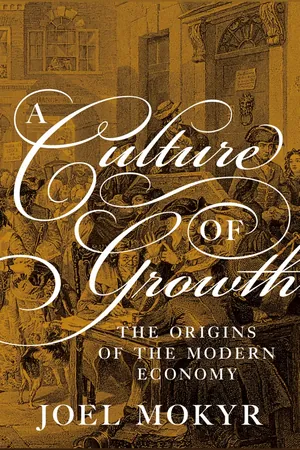 A Culture of Growth: The Origins of the Modern EconomyJoel Mokyr
 A Monetary History of the United States 1867-1960Friedman, Milton, Schwartz, Anna Jacobson
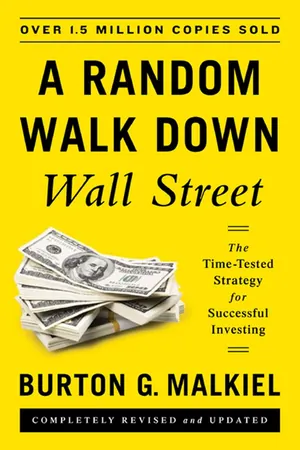 A Random Walk Down Wall StreetBurton G. Malkiel
 A Treatise on the FamilyGary S. Becker
 Against the GodsPeter L. Bernstein
 All the Devils Are HereBethany McLean, Joe Nocera
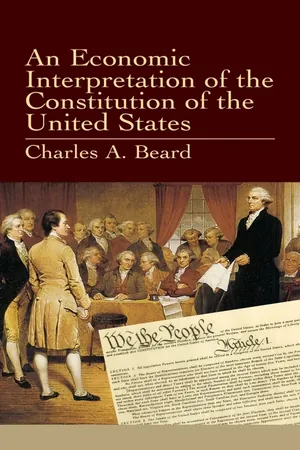 An Economic Interpretation of the Constitution of the United StatesCharles A. Beard
 Bailout: An Inside Account of How Washington Abandoned Main Street While Rescuing Wall StreetNeil Barofsky
 Banker to the Poor: The Story of the Grameen BankMuhammad Yunus