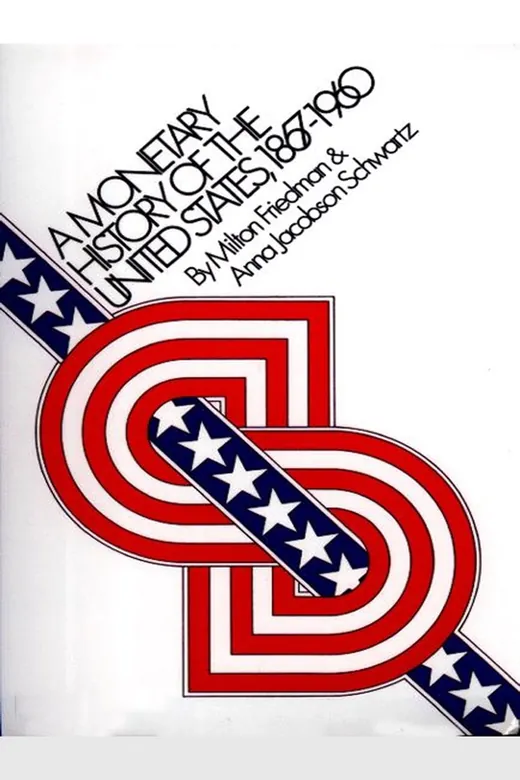
A Monetary History of the United States 1867-1960
How have changes in the quantity of money shaped American prices, income and crises from the Civil War to nineteen sixty?
 Knowingo
How have changes in the quantity of money shaped American prices, income and crises from the Civil War to nineteen sixty?
Friedman and Schwartz's most contested claim is that the Great Contraction became so severe largely because monetary authorities allowed the money stock to collapse. A common objection is that bank failures and monetary contraction were symptoms of a broader economic breakdown rather than an independent cause that policy could readily reverse. The authors answer with timing, institutional episodes, and comparisons showing how Federal Reserve choices intensified banking panics and permitted reserves and deposits to shrink. They do not claim that money was the only disturbance or that every monetary change begins inside the central bank. Their stronger counterfactual is that different lender action and monetary expansion could have prevented the contraction from becoming as deep. The dispute concerns causal weight, since the historical sequence supports a powerful monetary mechanism without turning a complex depression into one decision or one date.
 $2.00 a Day: Living on Almost Nothing in AmericaKathryn J. Edin, H. Luke Shaefer
 A Capitalism for the PeopleLuigi Zingales
 A Course in Game TheoryMartin J. Osborne, Ariel Rubinstein
 A Course in Microeconomic TheoryDavid M. Kreps
 A Culture of Growth: The Origins of the Modern EconomyJoel Mokyr
 A Random Walk Down Wall StreetBurton G. Malkiel
 A Treatise on the FamilyGary S. Becker
 Against the GodsPeter L. Bernstein
 All the Devils Are HereBethany McLean, Joe Nocera
 An Economic Interpretation of the Constitution of the United StatesCharles A. Beard
 Bailout: An Inside Account of How Washington Abandoned Main Street While Rescuing Wall StreetNeil Barofsky
 Banker to the Poor: The Story of the Grameen BankMuhammad Yunus