
A Course in Game Theory
How can we model decisions by several people whose outcomes depend on one another's choices, and what do such models predict?
 Knowingo
How can we model decisions by several people whose outcomes depend on one another's choices, and what do such models predict?
The textbook's most debatable commitment is to explain strategic interaction through sharply specified rational choice models. A common objection is that real people misunderstand games, care about fairness, follow habits, and make mistakes, so equilibrium can look like a prediction built from unrealistic agents. Osborne and Rubinstein answer by treating a model as a precise analytical object whose assumptions and implications must be stated, not as a claim that every person calculates perfectly. They also develop several solution concepts because different timing, information, and belief structures support different analyses. Equilibrium disciplines reasoning about mutual responses, but it does not guarantee that a predicted outcome is fair, efficient, unique, or empirically common. The remaining dispute concerns use: an abstract model can reveal strategic logic, yet its value in a particular setting depends on whether the selected players, actions, information, and preferences capture what matters there.
 $2.00 a Day: Living on Almost Nothing in AmericaKathryn J. Edin, H. Luke Shaefer
 A Capitalism for the PeopleLuigi Zingales
 A Course in Microeconomic TheoryDavid M. Kreps
 A Culture of Growth: The Origins of the Modern EconomyJoel Mokyr
 A Monetary History of the United States 1867-1960Friedman, Milton, Schwartz, Anna Jacobson
 A Random Walk Down Wall StreetBurton G. Malkiel
 A Treatise on the FamilyGary S. Becker
 Against the GodsPeter L. Bernstein
 All the Devils Are HereBethany McLean, Joe Nocera
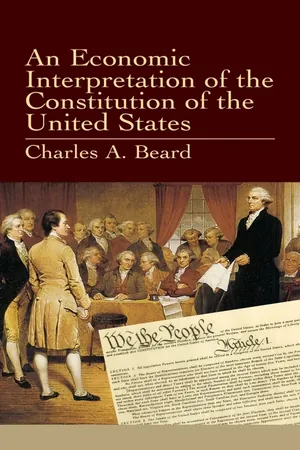 An Economic Interpretation of the Constitution of the United StatesCharles A. Beard
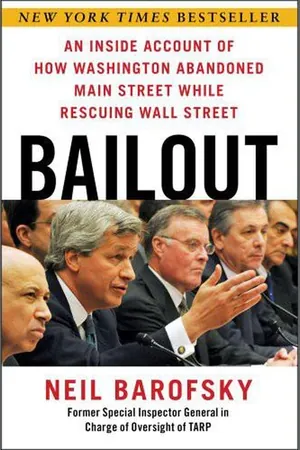 Bailout: An Inside Account of How Washington Abandoned Main Street While Rescuing Wall StreetNeil Barofsky
 Banker to the Poor: The Story of the Grameen BankMuhammad Yunus