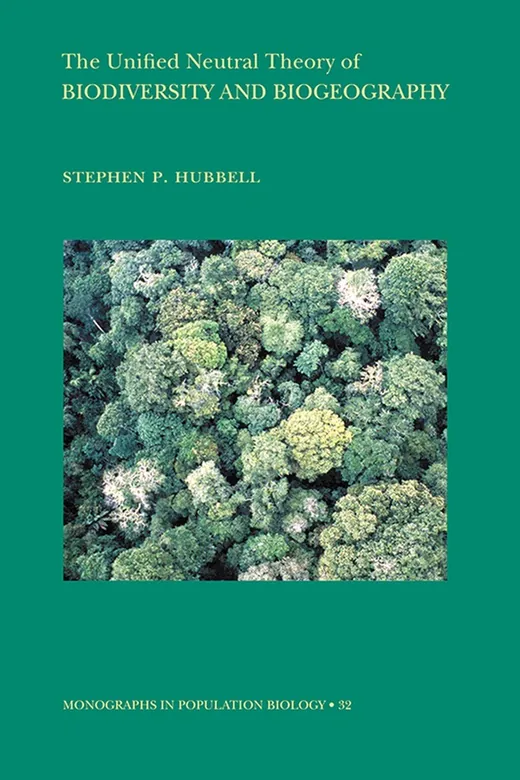
The Unified Neutral Theory of Biodiversity and Biogeography
Why do some species end up common and others rare, and can one general theory explain how many species live in a place?
 Knowingo
Why do some species end up common and others rare, and can one general theory explain how many species live in a place?
 A Beautiful MindNasar, Sylvia
 A Beautiful QuestionFrank Wilczek
 A Brief History of TimeStephen Hawking
 A City on MarsKelly Weinersmith, Zach Weinersmith
 A Mathematician’s ApologyG. H. Hardy
 A Short History of Nearly EverythingBill Bryson
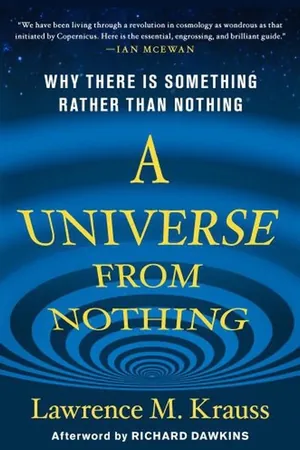 A Universe From Nothing · Why There Is Something Rather Than NothingKrauss, Lawrence M.
 Adaptation and natural selection; a critique of some current evolutionary thoughtGeorge C. Williams
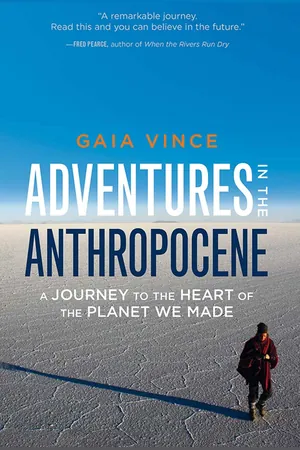 Adventures in the AnthropoceneGaia Vince
 Advice to a Young ScientistMedawar, P. B.
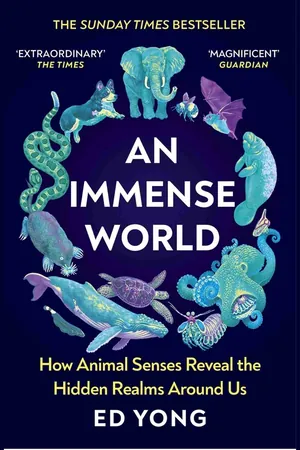 An Immense WorldEd Yong
 Beautiful Swimmers: Watermen, Crabs and the Chesapeake BayWilliam W. Warner