Knowingo
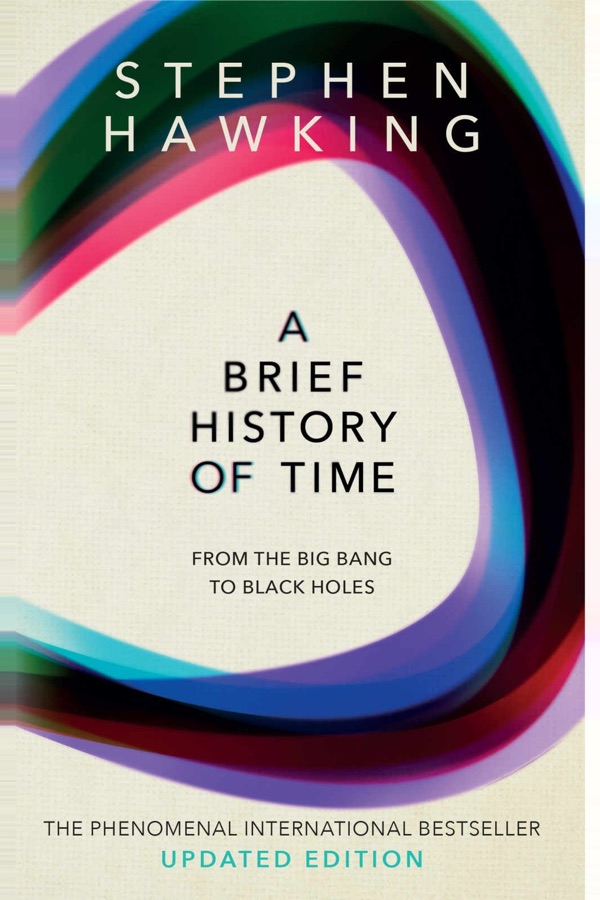
The cover of A Brief History of Time

A Brief History of Time

Where did the universe come from, and how might it end? Stephen Hawking explains black holes, the big bang and the nature of time so anyone can follow.

11 parts, about 22 minutes to read.

Why read it

  • Traces how ideas about the universe moved from tortoises and fixed spheres to relativity, an expanding cosmos and the big bang
  • Explains black holes, singularities and the author's own finding that black holes glow and slowly lose mass
  • Takes on why time seems to run one way and whether a universe with no edge leaves any place for a creator

Who it is for

  • Readers curious about where the universe came from and how it ends
  • People who want to follow how scientific theories are built and tested
  • Readers wondering whether time travel or a final theory is possible

What the summary covers

  1. From Tortoises to Newton3 min
  2. Space and Time1 min
  3. The Expanding Universe3 min
  4. Uncertainty1 min
  5. Black Holes2 min
  6. Black Holes Ain't So Black2 min
  7. The Origin and Fate of the Universe4 min
  8. The Arrow of Time1 min
  9. Wormholes and Time Travel1 min
  10. The Unification of Physics2 min
  11. Twenty Years Later2 min

Recommended by

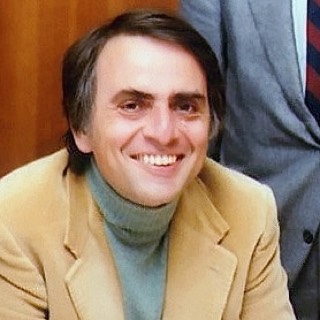
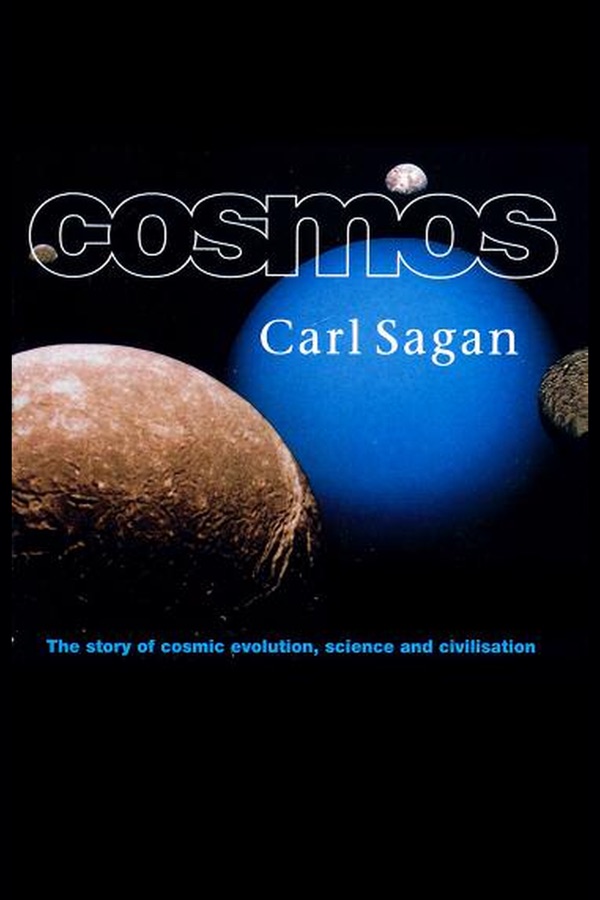
  • Carl SaganCornell University astronomy professor and Pulitzer Prize winner
    This is also a book about God … or perhaps about the absence of God
About the author

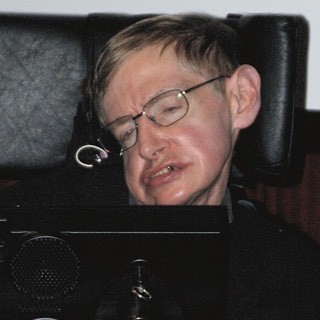
  • Stephen HawkingWas an English cosmologist and theoretical astrophysicist, Lucasian Professor at Cambridge 1979 to 2009
    • Born on 8 January 1942 in Oxford.
    • Studied physics at University College Oxford and graduated with a first class honours degree.
    • Did his PhD at Cambridge under Dennis Sciama, with a thesis titled Properties of Expanding Universes.
    • Developed, influenced by Roger Penrose, the singularity theorems showing that the universe began with the Big Bang.
    • Showed in 1974 that black holes have a temperature and produce radiation, now known as Hawking radiation.
    • Became Lucasian Professor of Mathematics, the chair once held by Isaac Newton, in 1979, and retired from it in 2009.
    • Was diagnosed with motor neurone disease as a student and later communicated through a computerised voice.
    • Awarded the CBE in 1982, made a Companion of Honour in 1989 and given the US Presidential Medal of Freedom in 2009.

Read it alongside

More books like this