Knowingo
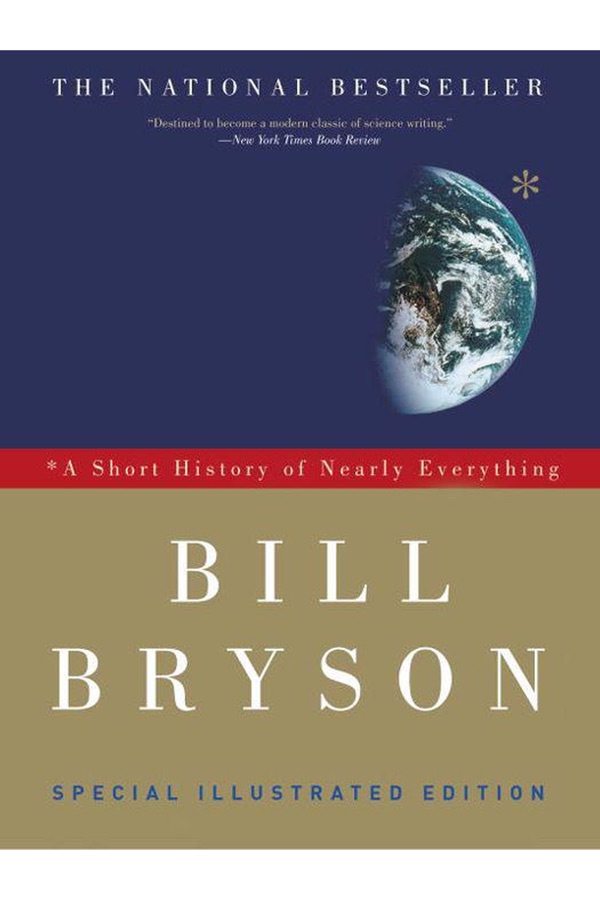
The cover of A Short History of Nearly Everything

A Short History of Nearly Everything

A lively tour from the Big Bang to us, showing how eccentric, quarrelsome scientists worked out what we know about our universe and how much still remains unknown.

16 parts, about 40 minutes to read.

Why read it

  • Retells how people measured the Earth, dated it and uncovered its deep past, through the stories of the scientists who did it
  • Shows how often scientific progress came through rivalry, amateurs and ignored claims, and how much remains unknown
  • Makes the case that life on Earth rests on a run of lucky breaks, and that humans are careless with it

Who it is for

  • Readers who want one tour through geology, biology and cosmology
  • Readers who ask how scientists know the age of the Earth
  • Readers concerned about extinction and the future of life on Earth

What the summary covers

  1. Lucky to Be Here2 min
  2. Building a Universe2 min
  3. The Emptiness of Space3 min
  4. Measuring the Earth2 min
  5. Deep Time and Old Bones3 min
  6. Elements and the Radioactive Clock2 min
  7. Relativity, Galaxies and Atoms3 min
  8. The Age of the Earth, and a Missing Universe2 min
  9. The Earth Moves2 min
  10. A Dangerous Planet3 min
  11. A Lucky Planet2 min
  12. How Life Began3 min
  13. Fossils, Extinctions and Uncounted Species3 min
  14. Cells, Darwin and DNA3 min
  15. Ice Ages and the Road to Us3 min
  16. Goodbye2 min

Recommended by

  • Simon WinchesterBritish American author and journalist
    Hefty, highly researched and eminently readable.
About the author

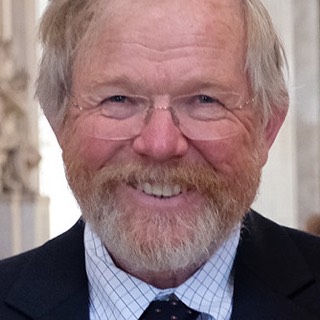
  • Bill BrysonUS born British journalist and author, former chancellor of Durham University
    • Born in Des Moines, Iowa, in 1951.
    • Left Drake University in 1972 after two years and backpacked around Europe for four months.
    • Worked as a journalist in Britain, rising to chief copy editor of the business section of The Times and deputy national news editor of the business section of The Independent.
    • Wrote Notes from a Small Island, an exploration of Britain, in 1995.
    • Has written nonfiction on travel, the English language and science.
    • Chancellor of Durham University from 2005 to 2011.
    • Elected an Honorary Fellow of the Royal Society in 2013, the first person from outside Britain to receive the honour.
    • Won the Aventis Prize for the best general science book of 2004 with A Short History of Nearly Everything.

More books like this