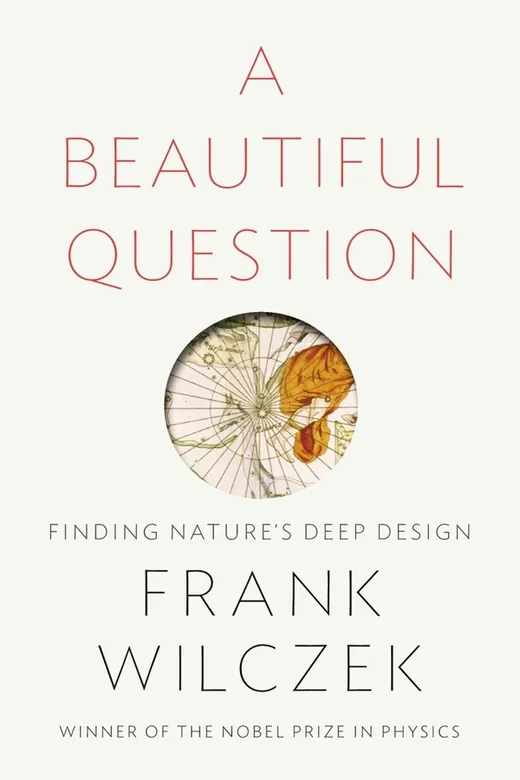
A Beautiful Question
Frank Wilczek traces beauty in physical law from musical ratios to quantum fields. See how symmetry guides discovery, and why elegant theories still need observation.
14 parts, about 30 minutes to read.


Frank Wilczek traces beauty in physical law from musical ratios to quantum fields. See how symmetry guides discovery, and why elegant theories still need observation.
14 parts, about 30 minutes to read.
Wilczek's most debatable proposition is that beauty can guide the search for fundamental physical truth. He develops beauty through concrete features such as symmetry, economy, and fruitful abundance, then reads major episodes in physics as a growing alignment between those qualities and nature's laws. A common objection is that aesthetic standards change and that elegant theories can fail, making beauty an unreliable judge rather than evidence. Wilczek partly accepts this risk by presenting beauty as a question and a research guide, not as a substitute for experiment. His historical examples also include abandoned pictures and revised ideals, which show that physicists learn what kind of beauty nature permits. The claim is therefore neither that every attractive equation is true nor that taste is irrelevant, but that disciplined aesthetic expectations can generate testable theories whose survival still depends on observation.
Wilczek shows that perceived colour compresses a richer physical spectrum. Seth proposes that the brain interprets sensory signals through predictions, estimating illumination so white paper can remain white under changing light.
 A Beautiful MindNasar, Sylvia
 A Brief History of TimeStephen Hawking
 A City on MarsKelly Weinersmith, Zach Weinersmith
 A Mathematician’s ApologyG. H. Hardy
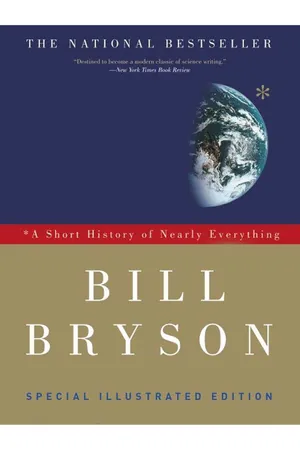 A Short History of Nearly EverythingBill Bryson
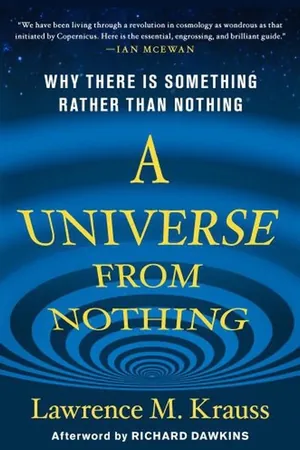 A Universe From Nothing · Why There Is Something Rather Than NothingKrauss, Lawrence M.
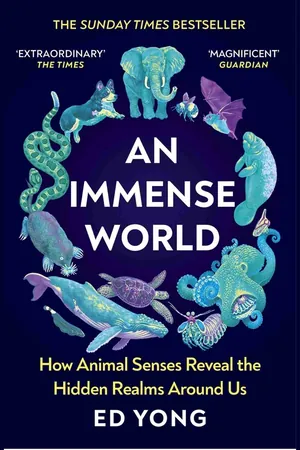 An Immense WorldEd Yong
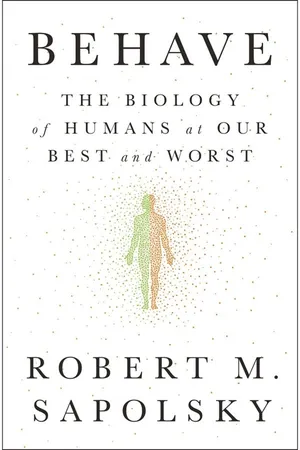 BehaveRobert M. Sapolsky
 Black Hole Blues and Other Songs from Outer SpaceLevin, Janna
 BlueprintRobert Plomin
 Braiding SweetgrassRobin Wall Kimmerer
 BurnHerman Pontzer