
Knowingo
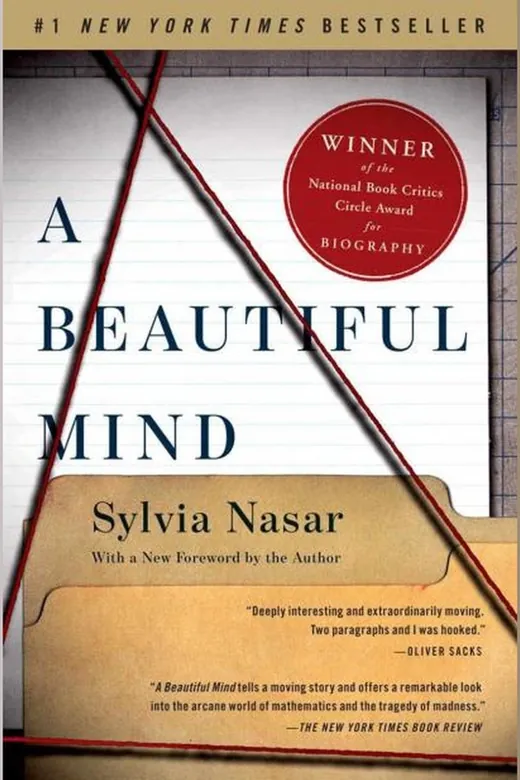
The cover of A Beautiful Mind

A Beautiful Mind

Sylvia Nasar traces John Nash's mathematics, psychiatric illness, family life, and eventual Nobel recognition, with close attention to the long, uneven path between early brilliance and renewed work.

6 parts, about 24 minutes to read.
At a glance

Author
Nasar, Sylvia
Parts
6 parts
Reading time
about 24 minutes
The whole book
Also to read in full

The idea people argue about

Nasar's most contested narrative problem is how to connect Nash's mathematical originality, mental illness, and later recovery without romanticizing any of them. A common objection to genius biographies is that suffering becomes evidence of brilliance or the price of exceptional creativity. Nasar instead shows illness interrupting work, damaging relationships, and producing beliefs that Nash and people around him experienced as destructive rather than productive. She also resists a simple medical cure story, describing a long, uneven return shaped by age, family support, a tolerant academic community, and Nash's growing ability to reject some delusional ideas. This account gives social conditions a role without claiming that affection alone cures schizophrenia. The controversy remains because a life organized around genius inevitably invites readers to search for a connection, while Nasar's evidence supports coexistence and interaction more clearly than a single causal bond.

Three common misunderstandings

  1. Nash equilibrium does not mean that every participant receives the best possible collective or personal result. It describes a position in which no player can improve by changing strategy alone, even when another outcome would be better for everyone.
  2. The biography does not depict recovery as a sudden complete disappearance of illness. Nasar describes gradual changes in Nash's behavior and judgment, periods of recurrence, and continuing uncertainty rather than a clean boundary between sick and well.
  3. The Nobel recognition was not a general prize for Nash's entire life story or for all of his mathematics. It honored his early work on noncooperative games, after an unusually contentious evaluation of both its importance and his condition.

What the summary covers

  1. Prologue1 min
  2. A Beautiful Mind8 min
  3. Separate Lives4 min
  4. A Slow Fire Burning4 min
  5. The Lost Years4 min
  6. The Most Worthy3 min

More books like this