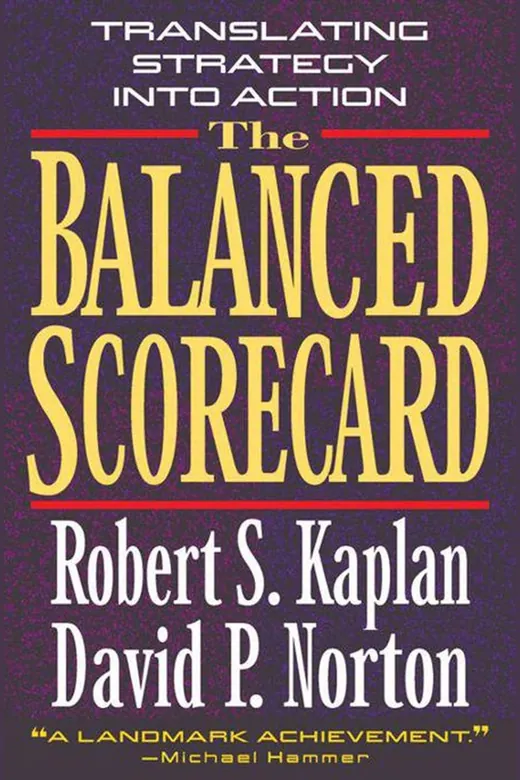
The cover of The Balanced Scorecard

The Balanced Scorecard

Why should managers measure more than financial results to run a company in the information age?

At a glance

Author
Robert S. Kaplan, David P. Norton

Why read it

  • You will stop judging a business on financial numbers alone, since they show past results but not whether future value is being built
  • You will learn how a scorecard sets customer and process measures beside the traditional financial ones
  • You will understand how the scorecard can help executives implement strategy, especially one that needs radical change

Who it is for

  • A senior executive whose reports show profit but not the future
  • A strategy officer turning goals into measurable targets
  • A department head asked to align budgets with strategy

Contents

  1. Preface
  2. C h a p t e r O n e
  3. COMPETING IN THE INFORMATION AGE
  4. New Operating Environment
  5. TRADITIONAL FINANCIAL ACCOUNTING MODEL
  6. THE BALANCED SCORECARD
  7. The Balanced Scorecard as a Management System
  8. SUMMARY
  9. C h a p t e r T w o
  10. FINANCIAL MEASUREMENT
  11. THE BALANCED SCORECARD
  12. Financial Perspective
  13. Customer Perspective
  14. Internal-Business-Process Perspective
  15. Learning and Growth Perspective
  16. LINKING MULTIPLE SCORECARD MEASURES TO A SINGLE STRATEGY
  17. Cause-and-Effect Relationships
  18. Performance Drivers
  19. SHOULD FINANCIAL MEASURES BE SCRAPPED?
  20. FOUR PERSPECTIVES: ARE THEY SUFFICIENT?
  21. ORGANIZATIONAL UNIT FOR A BALANCED SCORECARD
  22. STRATEGIC POSITIONING OR CORE COMPETENCIES/CAPABILITIES-DRIVEN?
  23. APPENDIX: LIMITATIONS OF FINANCIAL MEASUREMENTS OF BUSINESS PERFORMANCE
  24. P A R T O N E
  25. BALANCED SCORECARD COMPANIES
  26. C h a p t e r T h r e e
  27. LINKING FINANCIAL OBJECTIVES TO BUSINESS UNIT STRATEGY
  28. Risk Management
  29. Strategic Themes for the Financial Perspective
  30. Risk Management Objectives and Measures
  31. SUMMARY
  32. C h a p t e r F o u r
  33. MARKET SEGMENTATION
  34. Customer Core Measurement Group
  35. Beyond the Core: Measuring Customer Value Propositions
  36. KENYON STORES: DIRECT SELLING TO MASS MARKET
  37. Product Attributes
  38. Relationship: The Shopping Experience
  39. Brand and Image
  40. ROCKWATER: DIRECT SELLING TO INDIVIDUAL CUSTOMERS
  41. PIONEER PETROLEUM: INDIRECT SELLING TO MASS MARKET
  42. TIME, QUALITY, AND PRICE
  43. SUMMARY
  44. APPENDIX: PERFORMANCE DRIVERS FOR CUSTOMER SATISFACTION
  45. TIME
  46. QUALITY
  47. PRICE
  48. C h a p t e r F i v e
  49. THE INTERNAL-BUSINESS-PROCESS VALUE CHAIN
  50. The Innovation Process
  51. The Operations Process
  52. Postsale Service
  53. SPECIFIC INTERNAL-BUSINESS-PROCESS PERSPECTIVES
  54. Metro Bank
  55. Pioneer Petroleum
  56. SUMMARY
  57. APPENDIX: OPERATIONS PROCESS—TIME, QUALITY, AND COST MEASUREMENTS
  58. APPLYING PROCESS TIME MEASUREMENTS IN SERVICE INDUSTRIES
  59. PROCESS QUALITY MEASUREMENT
  60. National Motors

More books like this