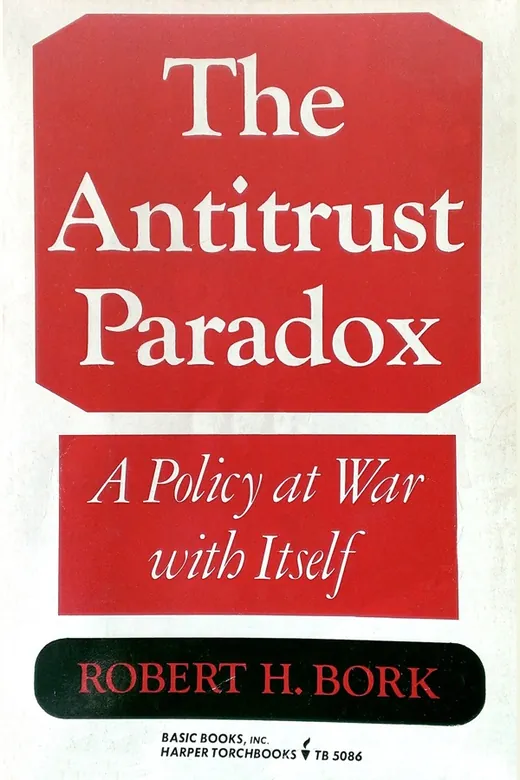
The Antitrust Paradox
Robert H. Bork argues that antitrust rules can suppress efficient competition. He develops a consumer welfare standard and applies it to mergers, cartels, vertical restraints, and pricing.
24 parts, about 32 minutes to read.


Robert H. Bork argues that antitrust rules can suppress efficient competition. He develops a consumer welfare standard and applies it to mergers, cartels, vertical restraints, and pricing.
24 parts, about 32 minutes to read.
 $2.00 a Day: Living on Almost Nothing in AmericaKathryn J. Edin, H. Luke Shaefer
 A Culture of Growth: The Origins of the Modern EconomyJoel Mokyr
 A Random Walk Down Wall StreetBurton G. Malkiel
 All the Devils Are HereBethany McLean, Joe Nocera
 Bailout: An Inside Account of How Washington Abandoned Main Street While Rescuing Wall StreetNeil Barofsky
 Capital in the Twenty First CenturyThomas Piketty
 Capitalism and Its CriticsJohn Cassidy
 Capitalism, Socialism and DemocracyJoseph A. Schumpeter
 Career and FamilyClaudia Goldin
 China Shakes the World: A Titan's Rise and Troubled Future and the Challenge for AmericaJames Kynge
 Dark Pools: The Rise of the Machine Traders and the Rigging of the U.S. Stock MarketScott Patterson
 Dead Aid: Why Aid Is Not Working and How There Is a Better Way for AfricaDambisa Moyo