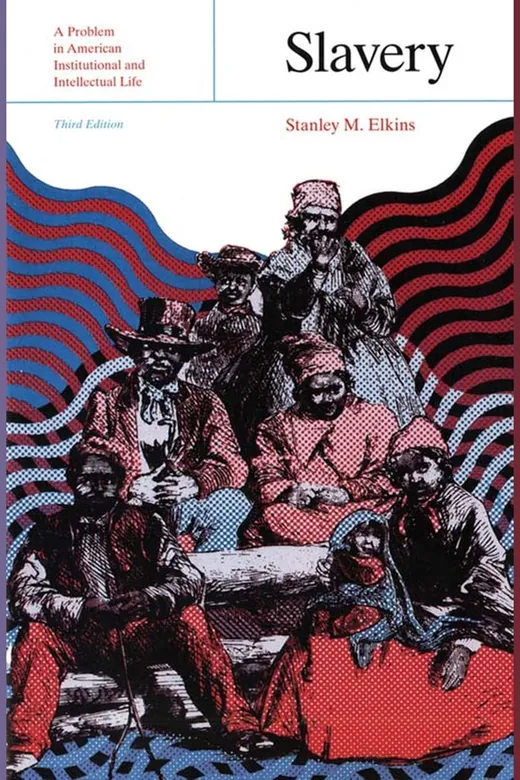
The cover of Slavery: A Problem in American Institutional and Intellectual Life

Slavery: A Problem in American Institutional and Intellectual Life

How did slavery as an institution shape the people who lived under it, and why did many thinkers who attacked it stay abstract?

At a glance

Author
Stanley M. Elkins

Why read it

  • You will learn to watch for guilt as a hidden driver of reform movements, and what it can leave undone
  • You will see how the rules and pressures of an institution can shape the personality of people living inside it
  • You will understand how the questions historians ask about slavery shift over the decades

Who it is for

  • A graduate student reading the old debate over slavery
  • A reformer who wonders why moral passion does not fix institutions
  • A reader curious how historians argue with their own earlier work

Contents

  1. Preface to the Third Edition
  2. Part I. An Introduction: Slavery as a Problem in Historiography
  3. Chapter 1. The Old Debate
  4. Chapter 2. The Problem of "New Viewpoints"
  5. Part II. Institutions and the Law of Slavery
  6. Chapter 1. Institutional Breakdown in an Age of Expansion
  7. Chapter 2. The Dynamics of Unopposed Capitalism
  8. Chapter 3. Slavery in Capitalist and Non-Capitalist Cultures
  9. Part III. Slavery and Personality
  10. Chapter 1. Personality Types and Stereotypes
  11. Chapter 2. The "African Culture" Argument
  12. Chapter 3. Shock and Detachment
  13. Chapter 4. Adjustment to Absolute Power in the Concentration Camp
  14. Chapter 5. Three Theories of Personality
  15. Chapter 6. Mechanisms of Resistance to Absolute Power
  16. Part IV. Slavery and the Intellectual
  17. Chapter 1. Institutions and Insights
  18. Chapter 2. Intellectuals without Responsibility
  19. Chapter 3. Sin, Guilty Innocence, and Reform
  20. Chapter 4. The Transcendentalist as Abolitionist
  21. Chapter 5. The Abolitionist as Transcendentalist
  22. Chapter 6. Choices
  23. Chapter 7. Postscript: Slavery, Consensus, and the Southern Intellect
  24. Part V. Slavery and Ideology
  25. Part VI. The Two Arguments on Slavery
  26. Appendix. Essay on Materials and Method

More books like this