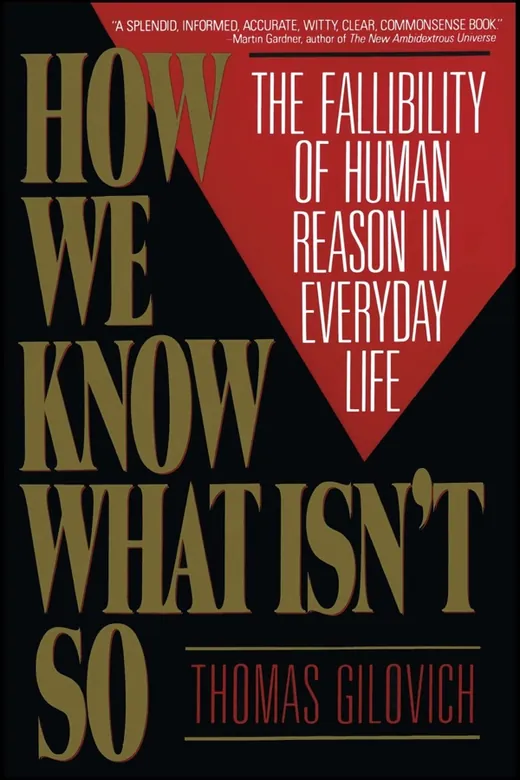
How We Know What Isn’t So: The Fallibility of Human Reason in Everyday Life
Why do smart people hold beliefs that are not true, and what can you do to catch the errors in your own thinking?
 Knowingo
Why do smart people hold beliefs that are not true, and what can you do to catch the errors in your own thinking?
 10% Happier: How I Tamed the Voice in My Head, Reduced Stress Without Losing My Edge, and Found Self Help That Actually Works A True StoryHarris, Dan
 A Secure BaseBowlby, John
 After VirtueAlasdair MacIntyre
 Algorithms to Live ByBrian Christian, Tom Griffiths
 Animal LiberationPeter Singer
 Art and Visual Perception: A Psychology of the Creative EyeRudolf Arnheim
 At the Existentialist CaféSarah Bakewell
 Being Wrong: Adventures in the Margin of ErrorKathryn Schulz
 Being You: A New Science of ConsciousnessAnil Seth
 Beyond Words: What Animals Think and FeelCarl Safina
 Black Box ThinkingMatthew Syed
 BlinkMalcolm Gladwell