Knowingo
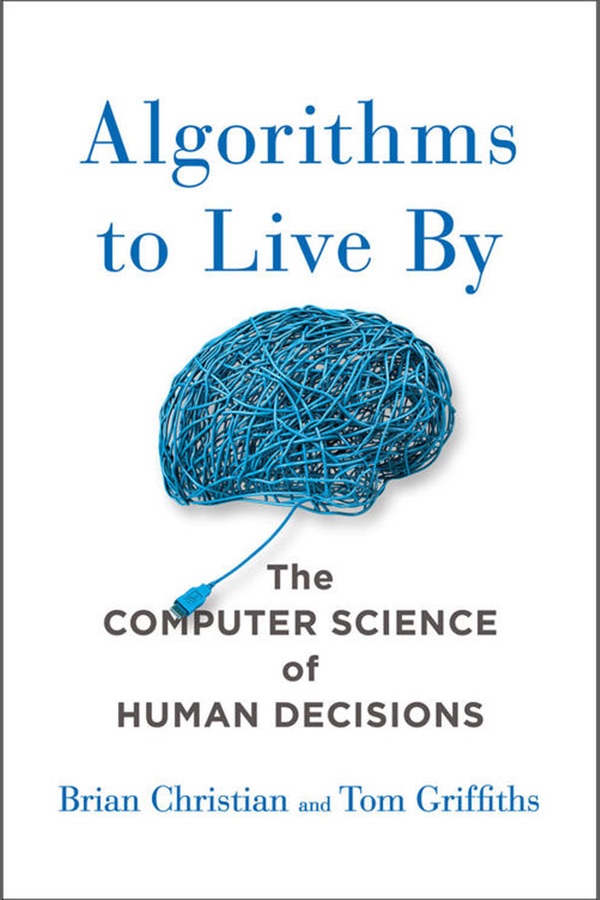
The cover of Algorithms to Live By

Algorithms to Live By

Computer science offers tested strategies for everyday dilemmas, from when to stop searching to how to schedule, sort, and predict, and shows many human struggles reflect genuinely hard problems.

13 parts, about 32 minutes to read.
Why read it

  • Turns computer science ideas into everyday advice, starting with a precise rule for when to stop looking and commit
  • Reframes messy habits, such as piling papers, skipping the sort or deciding early, as sound strategies backed by algorithms
  • Argues human mistakes often reflect how hard a problem is rather than flawed minds, and that good enough can be rational

Who it is for

  • People stuck deciding when to stop searching and commit
  • Overloaded people trying to schedule tasks and manage their time
  • Curious readers who like seeing computer science applied to everyday life

What the summary covers

  1. Introduction2 min
  2. Optimal Stopping: When to Stop Looking4 min
  3. Explore/Exploit: The Latest vs. the Greatest2 min
  4. Sorting: Making Order2 min
  5. Caching: Forget About It2 min
  6. Scheduling: First Things First3 min
  7. Bayes's Rule: Predicting the Future3 min
  8. Overfitting3 min
  9. Relaxation2 min
  10. Randomness3 min
  11. Networking: How We Connect2 min
  12. Game Theory: The Minds of Others2 min
  13. Conclusion: Computational Kindness2 min

Recommended by

  • Charles DuhiggPulitzer Prize winning journalist and author of The Power of Habit
    Compelling and entertaining, Algorithms to Live By is packed with practical advice about how to use time, space, and effort more efficiently.
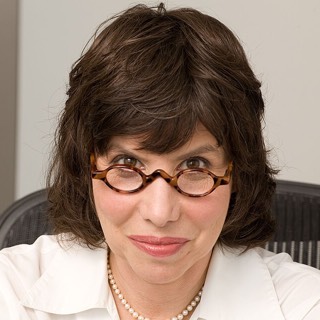
  • Alison GopnikProfessor of psychology at the University of California, Berkeley
    In this remarkably lucid, fascinating, and compulsively readable book, Christian and Griffiths show how much we can learn from computers.
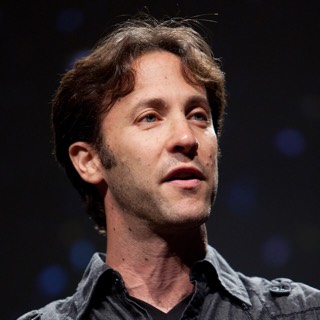
  • David EaglemanNeuroscientist at Stanford University and bestselling author
    This is a wonderful book, written so that anyone can understand the computer science that runs our world—and more importantly, what it means to our lives.

About the authors

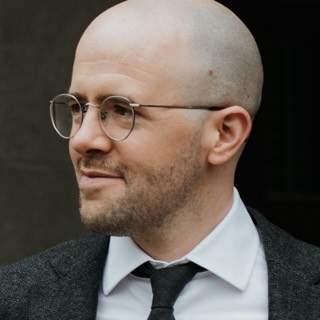
  • Brian ChristianAmerican nonfiction author writing on the human implications of computer science
    • Brian Christian was born in Wilmington, Delaware, and studied computer science and philosophy at Brown, poetry and nonfiction at the University of Washington, and cognitive science and machine learning at Oxford.
    • He is a Research Fellow at the Center for Human Compatible AI at UC Berkeley.
    • He completed his PhD at Oxford's Human Information Processing Lab, supported by the Clarendon Scholarship.
    • His book The Most Human Human was a Wall Street Journal bestseller and a New York Times Editors' Choice.
    • His book The Alignment Problem won the Excellence in Science Communication Award from the National Academies of Sciences, Engineering, and Medicine.
    • From 2013 to 2022 he was Director of Technology at the literary publisher McSweeney's.
    • His writing has appeared in The New Yorker, The Atlantic, Wired, The Wall Street Journal, The Guardian and The Paris Review.
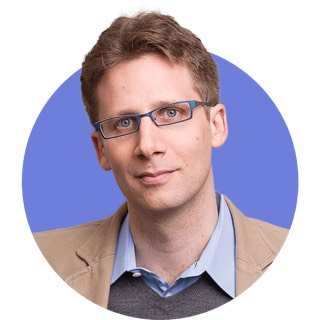
  • Tom GriffithsPrinceton professor who studies human decision making and computation
    • Tom Griffiths is a native of the United Kingdom who earned his BA at the University of Western Australia and his PhD at Stanford University.
    • He became a full professor at UC Berkeley in 2015.
    • His Princeton post is the first joint faculty appointment of the Department of Computer Science and the Department of Psychology.
    • He directs the Computational Cognitive Science Lab at Princeton, a research group focused on the mathematical foundations of human cognition.
    • In 2019 the National Academy of Sciences gave him a Troland Research Award for his research into how people and machines make decisions.
    • In 2017 he received a Guggenheim fellowship while at Berkeley.
    • He has published more than 150 scientific papers on topics from cognitive psychology to cultural evolution.

More books like this