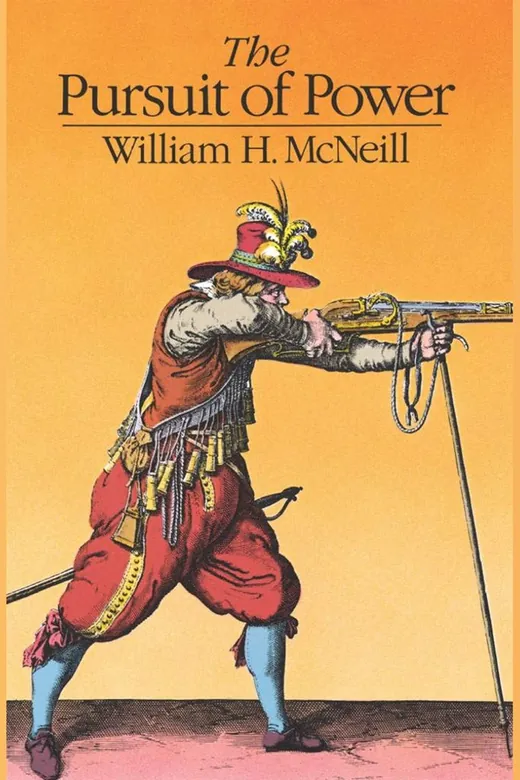
The cover of The Pursuit of Power: Technology, Armed Force, and Society since A.D. 1000

The Pursuit of Power: Technology, Armed Force, and Society since A.D. 1000

How have weapons, armies and economies shaped one another over the last thousand years, and where has that left us?

At a glance

Author
William H. McNeill

Why read it

  • You will see how a change in weapons can open new possibilities, and new limits, for whole societies
  • You will understand how markets and state commands have each organised the making of weapons
  • You will read today's arms races as the latest turn in a thousand year story of markets, states and weapons

Who it is for

  • A history reader curious how technology and politics push each other
  • A defence or policy professional wanting a long view
  • A business reader who wants to see arms races as economics

Contents

  1. Preface
  2. 1. Arms and Society in Antiquity
  3. Market and Command in Medieval China
  4. Market Mobilization beyond China’s Borders
  5. The Gunpowder Revolution and the Rise of Atlantic Europe
  6. The Market Asserts Control
  7. Geographical Spread
  8. Improvements in the Control of Armies
  9. Standardization and Quasi-Stabilization of European Armed Forces
  10. Disequilibrium Arising from Frontier Expansion
  11. Challenges Arising from Deliberate Reorganization
  12. The French Formula for Relieving Population Pressure
  13. The British Variant
  14. Postwar Settlement, 1815–40
  15. Commercial and National Armaments Rivalries
  16. A New Paradigm: The Prussian Way of War
  17. Global Repercussions
  18. Decay of Britain’s Strategic Position
  19. Emergence of the Military-Industrial Complex in Great Britain
  20. Naval Armament and the Politicization of Economics
  21. The Limits of Rational Design and Management
  22. International Repercussions
  23. Balance of Power and Demography in World Wars I and II
  24. Managerial Metamorphosis in World War I: First Phase, 1914–16
  25. Interwar Reaction and Return to Managed Economies during World War II
  26. 10. The Arms Race and Command Economies since 1945
  27. Conclusion

More books like this