Knowingo
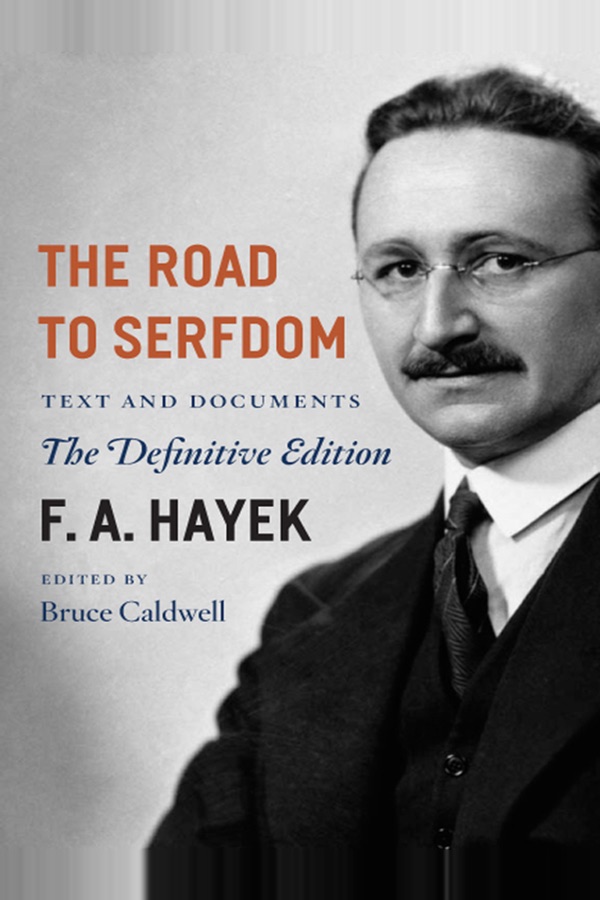
The cover of The Road to Serfdom

The Road to Serfdom

Hayek's 1944 warning that central economic planning, however well meant, concentrates power, erodes the Rule of Law and truth, and tends to lead free societies toward totalitarianism.

18 parts, about 34 minutes to read.

Why read it

  • Argues that central economic planning, however well meant, concentrates power in ways that erode freedom, law and democracy
  • Helps you spot how promises of security and justice can slowly shift who decides what, and why the worst tend to rise
  • Written as a warning from an economist who watched similar ideas take hold in more than one country, tracing their intellectual roots

Who it is for

  • Readers debating how much the state should run the economy
  • Students of political philosophy and economic history
  • Policy makers drawn to sweeping reform plans

What the summary covers

  1. Prefaces2 min
  2. Introduction1 min
  3. The Abandoned Road2 min
  4. The Great Utopia2 min
  5. Individualism and Collectivism2 min
  6. The “Inevitability” of Planning2 min
  7. Planning and Democracy2 min
  8. Planning and the Rule of Law2 min
  9. Economic Control and Totalitarianism2 min
  10. Who, Whom?2 min
  11. Security and Freedom2 min
  12. Why the Worst Get on Top2 min
  13. The End of Truth2 min
  14. The Socialist Roots of Naziism2 min
  15. The Totalitarians in Our Midst2 min
  16. Material Conditions and Ideal Ends2 min
  17. The Prospects of International Order2 min
  18. Conclusion1 min

Recommended by

  • Henry HazlittEconomic journalist, New York Times editorial writer
    One of the most important books of our generation.
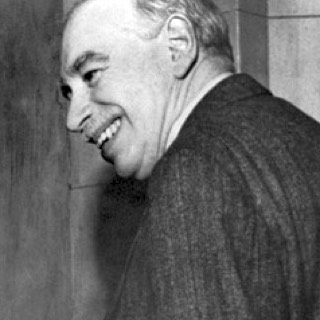
  • John Maynard KeynesEnglish economist
    Morally and philosophically I find myself in agreement with virtually the whole of it: and not only in agreement with it, but in deeply moved agreement.
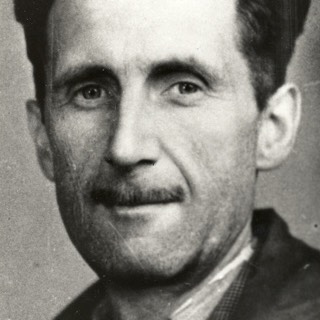
  • George OrwellEnglish novelist and essayist
    In the negative part of Professor Hayek’s thesis there is a great deal of truth. It cannot be said too often—at any rate, it is not being said nearly often enough—that collectivism is not inherently democratic, but, on the contrary, gives to a tyrannical minority such powers as the Spanish Inquisitors never dreamt of.
About the author

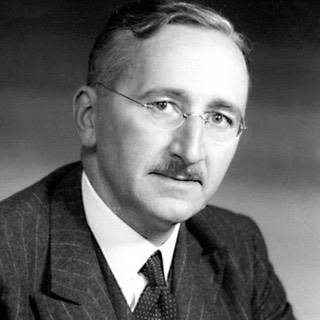
  • F. A. HayekAustrian economist and philosopher, Nobel laureate in economics, died in 1992
    • Born in Vienna in 1899, the son of a professor of botany at the University of Vienna.
    • He served on the Italian Front in 1917 and 1918, during the First World War.
    • He took a doctorate in law at the University of Vienna in 1921 and a second doctorate there in 1923.
    • From 1927 to 1931 he directed the Austrian Institute for Trade Cycle Research.
    • From 1931 to 1950 he was Tooke Professor of Economic Science and Statistics at the London School of Economics, where he wrote The Road to Serfdom.
    • He became a British national in 1938.
    • In 1944, the year the book appeared, he was elected a Fellow of the British Academy.
    • He then held a chair in the Committee on Social Thought at the University of Chicago from 1950 to 1962, and a chair at the University of Freiburg from 1962 to 1968.

More books like this