Knowingo
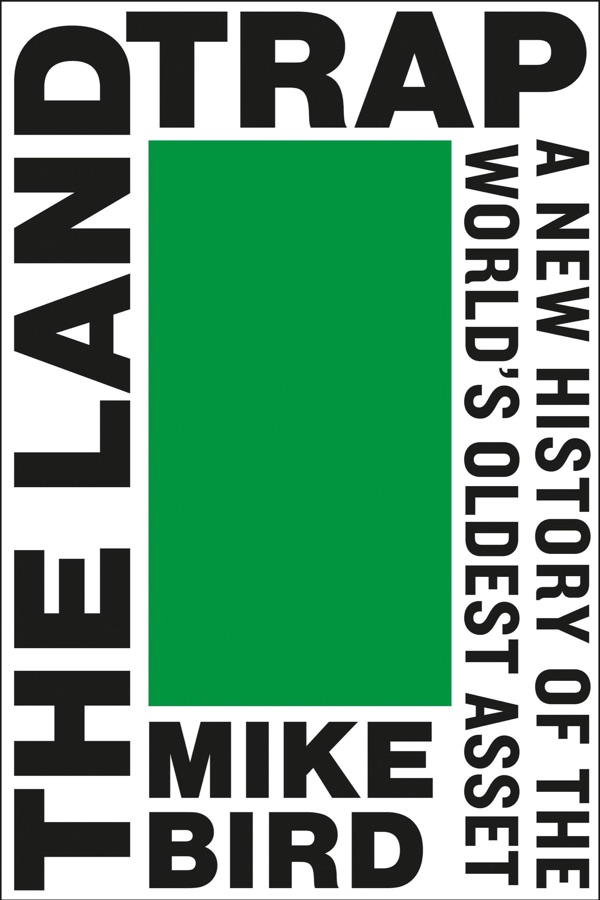
The cover of The Land Trap

The Land Trap

See why land remains capitalism's most powerful old asset, shaping credit, inequality, public finance, China's property boom, Singapore's housing model, and the politics of superstar cities.

13 parts, about 15 minutes to read.

Why read it

  • Learn the three traits that set land apart from other capital: nobody makes more, it cannot move, and it barely depreciates
  • Trace how rising land prices become credit and collateral, and how a price fall then brings fragile banks, stagnation and a balance sheet recession
  • Compare how Japan, China, Hong Kong and Singapore each handled land, and what Singapore shows about designing the system early

Who it is for

  • Homeowners and aspiring buyers asking why housing feels out of reach
  • Readers trying to understand property bubbles and the crashes that follow
  • Students of economic history, inequality and urban policy

What the summary covers

  1. The Oldest Asset in the Modern Economy1 min
  2. Why Land Behaves Differently2 min
  3. America Learns to Turn Land into Money2 min
  4. Henry George and the Lost Politics of Land1 min
  5. Why Georgism Faded1 min
  6. Land Reform as Cold War Strategy1 min
  7. The Quiet Return of Land Through Finance1 min
  8. Japan Shows the Trap Closing1 min
  9. Hong Kong Teaches China a Fiscal Trick1 min
  10. China Builds the Biggest Land Bubble1 min
  11. Singapore Bends the Rules1 min
  12. Superstar Cities Revive the Old Problem1 min
  13. Recognizing the Trap1 min

Recommended by

  • Roula KhalafEditor of the Financial Times
    The Land Trap is well researched and eloquently crafted, a pleasurable read I hope you’ll enjoy as much as I did.
  • Robin WigglesworthEditor of FT Alphaville and author of Trillions
    The Land Trap is a phenomenal tale of the original asset to beat all others.

  • Jerusalem DemsasFounder and editor of The Argument
    We know that land can neither be created nor destroyed, but what The Land Trap shows is that it also can no longer be ignored.
  • Matthew CampbellBloomberg Businessweek reporter and author
    The Land Trap is an outstanding alternative history of the modern world, through the prism of the asset that’s come to dominate so many developed economies.
  • Gregory ZuckermanWall Street Journal special writer and author
    Mike Bird demonstrates the important and under-appreciated roles that land ownership, conflict, reform, and redistribution have played throughout modern history in a compelling, even eye-opening way. An illuminating read.

  • Ed ConwayEconomics Editor of Sky News and author
    One of those books that changes the way you see the world. Gripping, urgent, important.

  • Rory SutherlandPresident Emeritus of Ogilvy Consulting and author
  • Lewis BastonPolitical historian and author of Borderlines
    A deftly written tale.

About the author

  • Mike BirdWall Street editor at The Economist and author
    • Mike Bird is The Economist's Wall Street editor, leading coverage of the American financial industry and contributing to coverage of finance globally.
    • He cohosts the financial podcast Money Talks.
    • Before The Economist's Wall Street desk, he was a financial columnist and market reporter at The Wall Street Journal.
    • He studied history and politics at the University of Exeter in the UK and is based in New York.
    • He was earlier The Economist's Asia business and finance editor, and moved to Singapore from Hong Kong.
    • At The Economist he covered Asian financial markets and large corporate developments, with an interest in China's property market.

More books like this