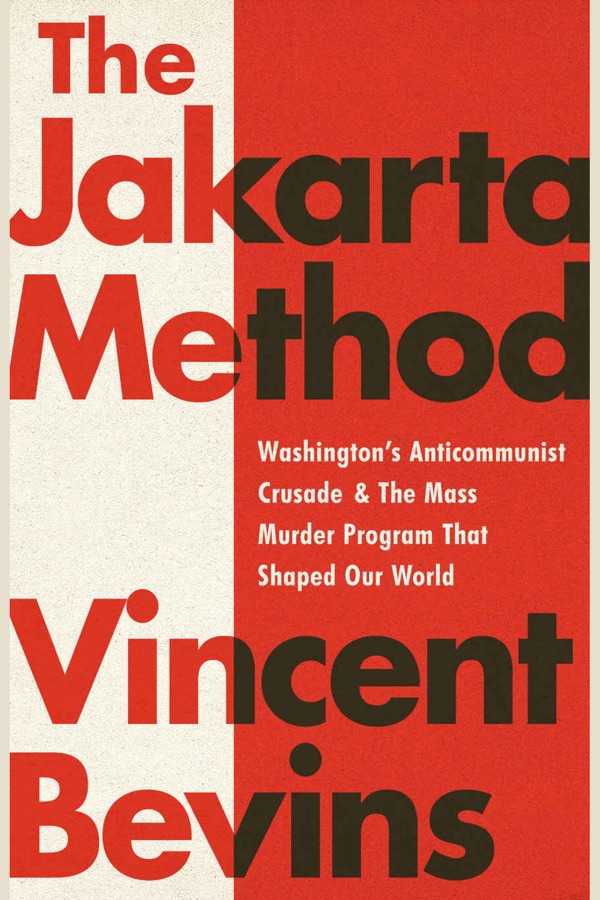
The Jakarta Method
How Indonesia's anticommunist massacres of 1965 and 1966, backed by Washington, became a model for mass killing from Brazil and Chile to Guatemala, and shaped today's world.
13 parts, about 28 minutes to read.


How Indonesia's anticommunist massacres of 1965 and 1966, backed by Washington, became a model for mass killing from Brazil and Chile to Guatemala, and shaped today's world.
13 parts, about 28 minutes to read.

Tragically, that which everyone believed we had left in the past has returned to spread throughout Latin America once more. The Jakarta Method allows us to understand the moment that Brazil is now living through, and its connection to a much larger, global scheme.
One of the best, most informative and most illuminating histories yet of [the CIA] and the way it has shaped the actual, rather than the propagandistic, U.S. role in the world.

Essential and devastating.

In The Jakarta Method, Vincent Bevins argues persuasively that during the Cold War, the U.S. approved of mass murder campaigns to roll back communism in the Third World. This is a provocative, necessary book, an essential guide to anyone seeking a deeper understanding of our imperfect world. Highly recommended.
Bevins is a brilliant and compassionate writer, and The Jakarta Method is eye-opening. I really hope the world pays attention to this book.

This fascinating book is a meticulous and shocking analysis of a little-known and horrifically bloody battle of the Cold War, but it is also something more. It places the Indonesia massacre of 1965 in its global context, showing how the United States both supported it and used it as a model for repression in other countries.

A full tally of the body count of the transnational counterinsurgency Washington has been waging since the early 1960s is impossible. But Bevins’ excellent book offers a different kind of reckoning, of moral costs and ongoing political consequences.

This is an indispensable book for all those interested in the Third World during the era of the Cold War, and in the links between various operations of ‘the Anti-Communist International’, a subject whose importance will I think only increase.
This, for my money, may be the must-read book about the Cold War.
 1929Andrew Ross Sorkin
 ChokepointsEdward Fishman
 Collapse: How Societies Choose to Fail or SucceedJared Diamond
 Enlightenment NowSteven Pinker
 Escape from RomeWalter Scheidel
 Genghis Khan and the Making of the Modern WorldJack Weatherford
 Guns, Germs, and SteelJared Diamond
 Homo DeusYuval Noah Harari
 King Leopold's GhostAdam Hochschild
 King of KingsScott Anderson
 Long Walk to FreedomNelson Mandela
 LongitudeDava Sobel