Knowingo
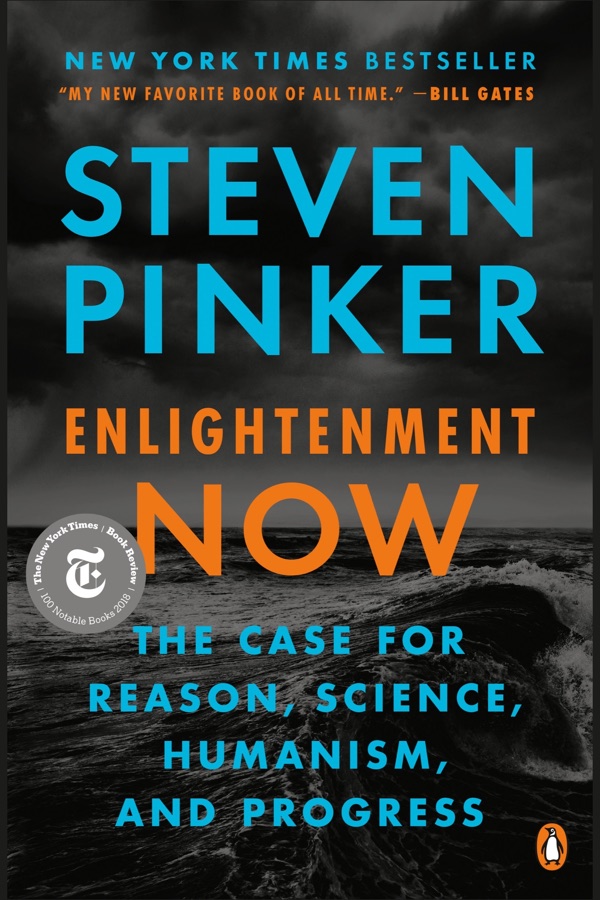
The cover of Enlightenment Now

Enlightenment Now

Pinker marshals data on lifespan, poverty, violence, knowledge, and happiness to show how much reason, science, and humanism have improved human life, and why those Enlightenment ideals need defending now.

16 parts, about 43 minutes to read.

Why read it

  • Measures progress with data on life expectancy, poverty, violence and literacy, and shows how few people know how far it has gone
  • Explains why news and the availability heuristic make people think the world is worsening while the numbers say otherwise
  • Defends reason, science and humanism against religion, romantic environmentalism and populism, while treating nuclear war as a real threat

Who it is for

  • Readers who feel the news leaves the world looking hopeless
  • Readers weighing climate, poverty and nuclear risk against the data
  • Readers who want a reasoned case for science and humanism

What the summary covers

  1. The Case for Enlightenment Ideals3 min
  2. Entropy, Evolution, and Information2 min
  3. The Counter Enlightenments2 min
  4. Progressophobia2 min
  5. Life, Health, and Sustenance4 min
  6. Wealth and Inequality3 min
  7. The Environment3 min
  8. Peace, Safety, and Terrorism3 min
  9. Democracy and Equal Rights3 min
  10. Knowledge and the Freedom of Time2 min
  11. Happiness2 min
  12. Existential Threats3 min
  13. The Future of Progress3 min
  14. Reason3 min
  15. Science2 min
  16. Humanism3 min

Recommended by

  • Bill GatesMicrosoft cofounder and philanthropist
    It's my new favorite book of all time.
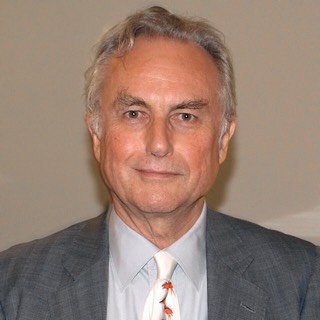
  • Richard DawkinsEvolutionary biologist and author of The Selfish Gene
    Steven Pinker's mind bristles with pure, crystalline intelligence, deep knowledge and human sympathy.
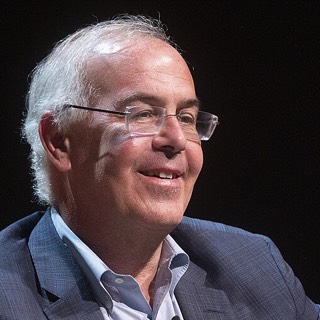
  • David BrooksColumnist at The New York Times
    Pinker is a paragon of exactly the kind of intellectual honesty and courage we need to restore conversation and community.
  • Nicholas KristofColumnist at The New York Times
    A terrific book

About the author

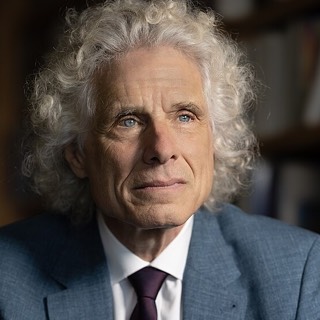
  • Steven PinkerHarvard psychology professor and cognitive psychologist
    • Born in 1954 in the English speaking Jewish community of Montreal, Canada.
    • Earned his bachelor's degree in experimental psychology at McGill University.
    • Earned his doctorate at Harvard in 1979.
    • Taught at MIT from 1982 until 2003, when he returned to Harvard.
    • His doctoral dissertation and early research focused on visual cognition; language development in children later took over his research.
    • Published The Language Instinct in 1994, the first of his books for a general audience.
    • Elected to the National Academy of Sciences and twice a Pulitzer Prize finalist.
    • Named one of Time's 100 Most Influential People in the World in 2004.

More books like this