Knowingo
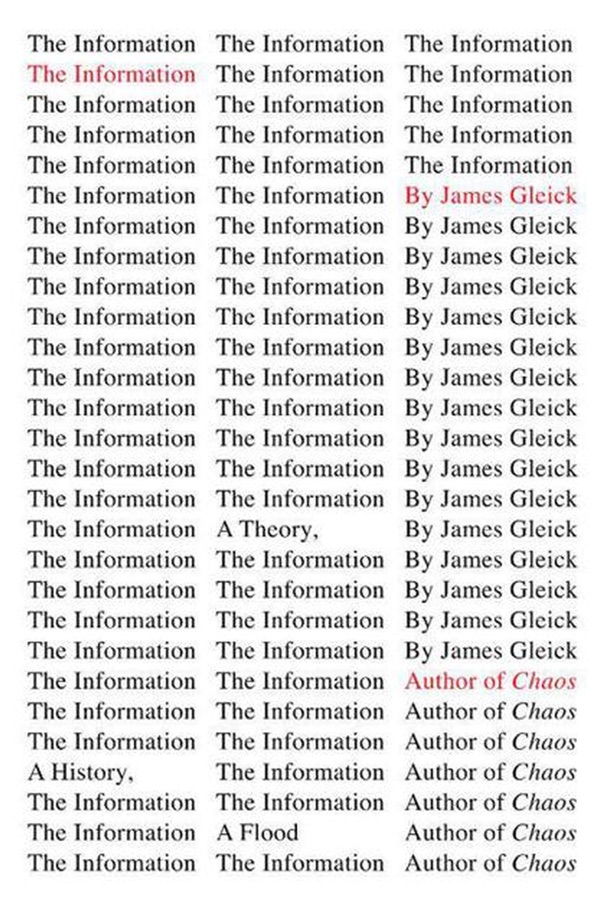
The cover of The Information: A History, a Theory, a Flood

The Information: A History, a Theory, a Flood

From African talking drums to Shannon's bits, DNA and Wikipedia, a history of how people learned to send, store and measure information, and what the resulting flood means for meaning.

17 parts, about 31 minutes to read.

Why read it

  • Traces information from African talking drums and the alphabet through the telegraph to Wikipedia and the Internet
  • Explains how a bit measures information regardless of meaning, and links that idea to entropy, DNA, randomness and the physics of erasing memory
  • Weighs today's flood of information, from endless playlists to online encyclopedias, against old tools of filtering and searching

Who it is for

  • Readers curious how bits, codes and messages became a science
  • People who feel overwhelmed by too much information
  • Readers who enjoy the history of ideas, from telegraphs to genetics

What the summary covers

  1. Prologue2 min
  2. Drums That Talk2 min
  3. The Persistence of the Word2 min
  4. Two Wordbooks1 min
  5. To Throw the Powers of Thought into Wheel Work2 min
  6. A Nervous System for the Earth2 min
  7. New Wires, New Logic2 min
  8. Information Theory2 min
  9. The Informational Turn2 min
  10. Entropy and Its Demons2 min
  11. Life's Own Code2 min
  12. Into the Meme Pool1 min
  13. The Sense of Randomness2 min
  14. Information Is Physical2 min
  15. After the Flood3 min
  16. New News Every Day1 min
  17. Epilogue1 min

Recommended by

  • Janet MaslinFormer New York Times book critic
    The Information is so ambitious, illuminating and sexily theoretical that it will amount to aspirational reading for many of those who have the mettle to tackle it.
  • Philip BallBritish science writer
    To grasp what information truly means—to explain why it is shaping up as a unifying principle of science—Gleick has to embrace linguistics, logic, telecommunications, codes, computing, mathematics, philosophy, cosmology, quantum theory and genetics.
  • Cory DoctorowScience fiction author and activist
    The Information isn’t just a natural history of a powerful idea; it embodies and transmits that idea, it is a vector for its memes, and it is a toolkit for disassembling the world.

About the author

  • James GleickAmerican author and historian of science
    • Born in New York City in 1954, he graduated from Harvard College in 1976.
    • He helped found Metropolis, an alternative weekly newspaper in Minneapolis, and then worked for ten years as an editor and reporter for The New York Times.
    • His first book, Chaos, was a finalist for the National Book Award and the Pulitzer Prize and a national bestseller.
    • His biographies Genius, about Richard Feynman, and Isaac Newton were both shortlisted for the Pulitzer Prize.
    • In 1993 he founded The Pipeline, a pioneering New York City internet service, and was its chairman and chief executive officer until 1995.
    • He spent about seven years writing The Information.
    • The Information, published in 2011, won the Royal Society Winton Prize in 2012.
    • He served as president of the Authors Guild from 2017 to 2019.

More books like this