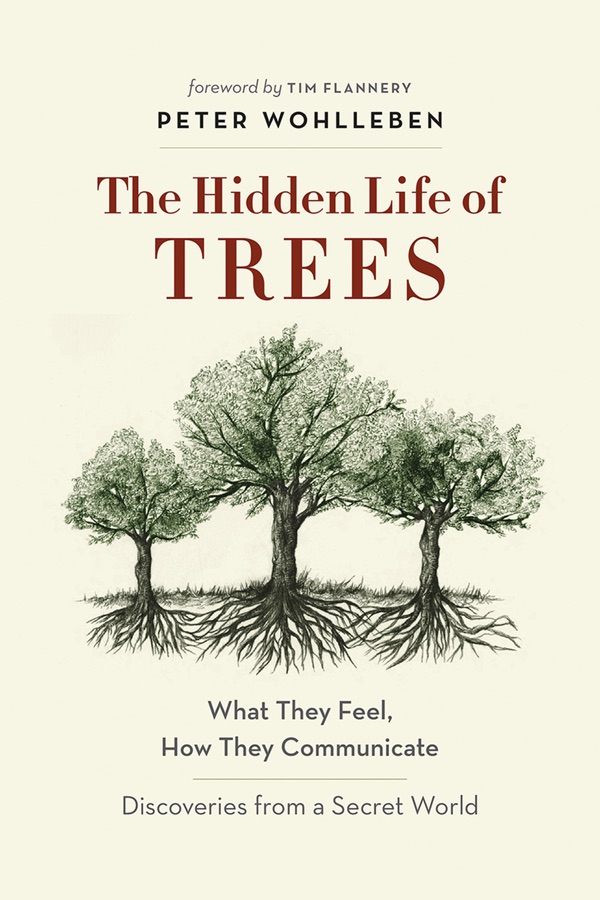
The Hidden Life of Trees
How trees share food and warnings through fungal networks, why forests need old trees and mixed species, and what a forester came to see by watching them.
17 parts, about 25 minutes to read.


How trees share food and warnings through fungal networks, why forests need old trees and mixed species, and what a forester came to see by watching them.
17 parts, about 25 minutes to read.

“At once romantic and scientific, [Wohlleben's] view of the forest calls on us all to reevaluate our relationships with the plant world.”

You will never look at a tree the same way after reading Peter Wohlleben’s The Hidden Life of Trees, which reveals the mindboggling properties and behavior of these terrestrial giants. Read this electrifying book, then go out and hug a tree - with admiration and gratitude.

[A] declaration of love and an engrossing primer on trees, brimming with facts and an unashamed awe for nature.
Peter Wohlleben’s The Hidden Life of Trees breaks entirely new ground ... [Wohlleben] has listened to trees and decoded their language. Now he speaks for them.

The Hidden Life of Trees is a wonderful, provocative book that draws together half a century of much-neglected and misunderstood plant science and frames it within field observations by an acute and empathetic forester.

[W]hat emerges from Wohlleben’s revelatory reframing of our oldest companions is an invitation to see anew what we have spent eons taking for granted

Wohlleben argues that trees in a stand appear to share sugar through roots and fungi and feed weaker neighbors; Sheldrake argues that fungal transfers vary from study to study, can flow without any intent to help, and do not show that every forest is one cooperative system.
 A Brief History of TimeStephen Hawking
 A Short History of Nearly EverythingBill Bryson
 An Immense WorldEd Yong
 BehaveRobert M. Sapolsky
 BlueprintRobert Plomin
 Braiding SweetgrassRobin Wall Kimmerer
 BurnHerman Pontzer
 Calling BullshitCarl T. Bergstrom, Jevin D. West
 CosmosCarl Sagan
 DeterminedRobert M. Sapolsky
 Entangled LifeMerlin Sheldrake
 Everything Is PredictableTom Chivers