Knowingo
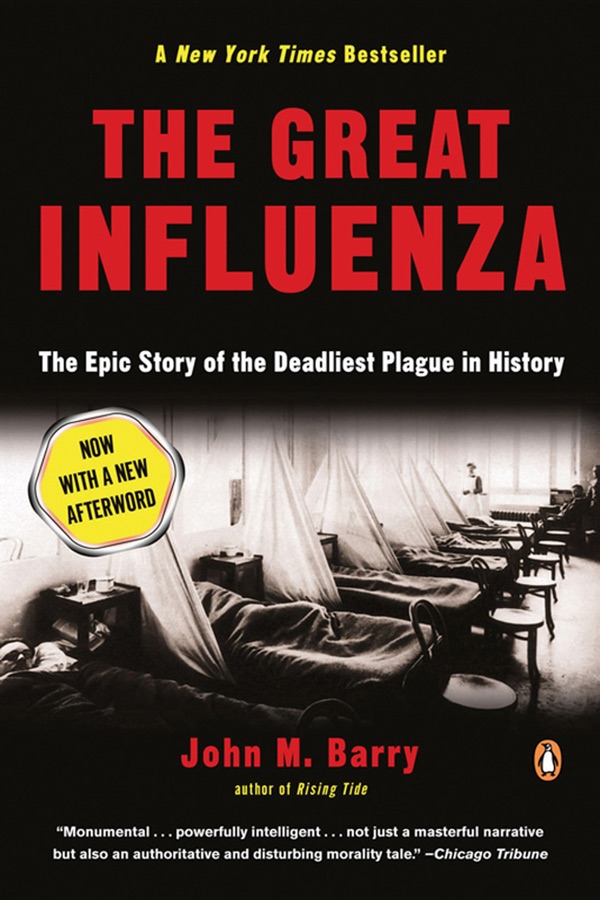
The cover of The Great Influenza

The Great Influenza

The 1918 influenza pandemic, which likely killed at least 50 million people and possibly 100 million, told through the scientists who hunted its cause and the officials who minimized it.

16 parts, about 32 minutes to read.

Why read it

  • Tells the story of the flu pandemic at the end of the First World War as a collision between nature and modern science
  • Shows how officials who played down the disease bred more terror than candour would have, a lesson for any crisis
  • Weaves the rise of American medical research with a city by city account of the outbreak

Who it is for

  • Readers who lived through a pandemic and want perspective
  • Public health officials planning for the next outbreak
  • Science readers curious how modern medical research took shape

What the summary covers

  1. Prologue2 min
  2. The Warriors2 min
  3. The First Cures and the Great Reform2 min
  4. The Swarm2 min
  5. The Tinderbox2 min
  6. It Begins3 min
  7. Explosion3 min
  8. The Pestilence2 min
  9. The Race2 min
  10. The Tolling of the Bell2 min
  11. Philadelphia1 min
  12. Fear1 min
  13. Lingerer2 min
  14. Endgame2 min
  15. The Last Victim2 min
  16. Afterword2 min

Recommended by

  • Bill GatesCofounder of Microsoft and the Gates Foundation

About the author

  • John M. BarryAmerican author and historian
    • Born in Providence, Rhode Island, and graduated from Brown University in 1968.
    • Before becoming a writer he coached football at the high school, small college and major college levels.
    • In the 1970s he moved to Washington DC as a freelance magazine writer and became Washington editor of Dun's Review and Dun's Business Month.
    • His book Rising Tide won the Francis Parkman Prize of the Society of American Historians for the year's best book of American history.
    • The National Academies of Sciences named The Great Influenza the year's outstanding book on science or medicine.
    • From 2004 he worked with the National Academies and federal agencies on influenza preparedness and response.
    • After Hurricane Katrina he chaired a bipartisan working group on flood protection and from 2007 to 2013 served on the Louisiana Coastal Protection and Restoration Authority.
    • Distinguished Scholar at the Tulane University School of Public Health and Tropical Medicine; lives in New Orleans.

More books like this