
Knowingo
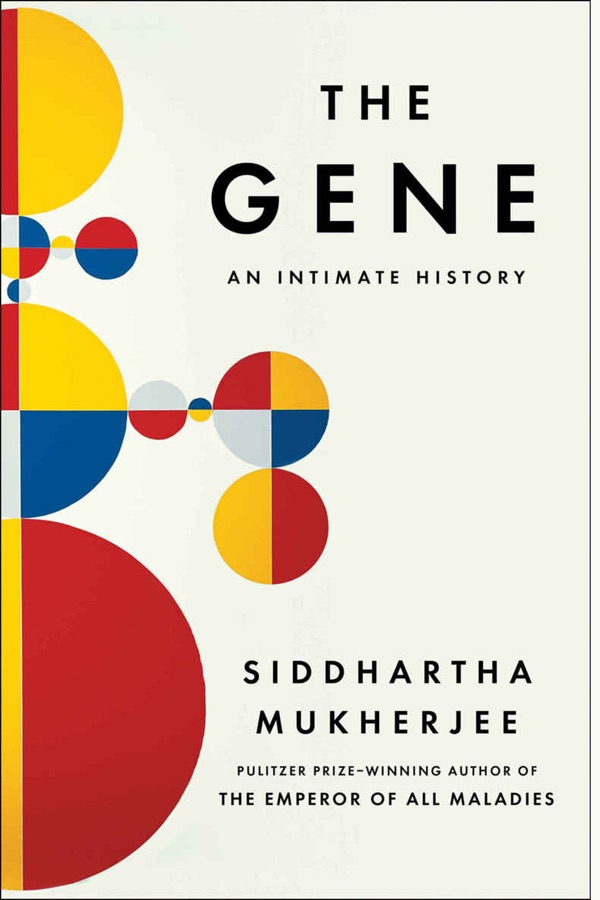
The cover of The Gene: An Intimate History

The Gene: An Intimate History

Mental illness ran through Mukherjee's family. Follow the gene from Mendel's peas through eugenics and the double helix to gene editing, and weigh what rewriting our genomes could cost.

18 parts, about 38 minutes to read.

Why read it

  • Weaves the history of heredity, from peas to DNA to genome mapping, with the author's own family history of mental illness
  • Shows how the gene idea was twisted into eugenics and sterilization laws, and why variation is the norm rather than a defect
  • Explains why genes set tendencies rather than destiny, and weighs the choices raised by embryo screening and gene editing

Who it is for

  • Readers with mental illness or other conditions in their family
  • People weighing genetic testing for themselves or their children
  • Readers who want the science of genes told as a human story

What the summary covers

  1. Families3 min
  2. The missing mechanism2 min
  3. Rediscovery and a warning1 min
  4. Eugenics2 min
  5. Abhed1 min
  6. Genes, environment and chance2 min
  7. Nazi eugenics and its mirror2 min
  8. The molecule and the code2 min
  9. Switches, embryos and chance2 min
  10. Learning to write and read DNA3 min
  11. My father's fall2 min
  12. Mapping the genome2 min
  13. Identity3 min
  14. The Hunger Winter2 min
  15. Writing into humans2 min
  16. Previvors3 min
  17. Editing the germ line2 min
  18. Bheda, abheda2 min

Recommended by

  • Ken BurnsDocumentary filmmaker
    Sid Mukherjee has the uncanny ability to bring together science, history, and the future in a way that is understandable and riveting, guiding us through both time and the mystery of life itself.
  • Anthony DoerrPulitzer Prize winning novelist
    This is perhaps the greatest detective story ever told—a millennia-long search, led by a thousand explorers, from Aristotle to Mendel to Francis Collins, for the question marks at the center of every living cell.
  • Paul BergNobel laureate in chemistry
    The Gene is a magnificent synthesis of the science of life, and forces all to confront the essence of that science as well as the ethical and philosophical challenges to our conception of what constitutes being human.

About the author

  • Siddhartha MukherjeePhysician and biologist, winner of the 2011 Pulitzer Prize for General Nonfiction
    • Born in New Delhi, India
    • Studied biology at Stanford, earned a D.Phil. at Oxford as a Rhodes Scholar and an M.D. at Harvard
    • As a Stanford biology major he worked in the laboratory of the Nobel laureate Paul Berg
    • Associate Professor of Medicine at Columbia University and an oncologist at its medical center
    • His research covers the physiology of cancer cells, immunological therapy for blood cancers and stem cells that form bone and cartilage
    • His first book, The Emperor of All Maladies (2010), won the 2011 Pulitzer Prize for General Nonfiction
    • Both The Emperor of All Maladies and The Gene were adapted into PBS documentaries by Ken Burns
    • A member of the National Academy of Medicine

Read it alongside

More books like this