Knowingo
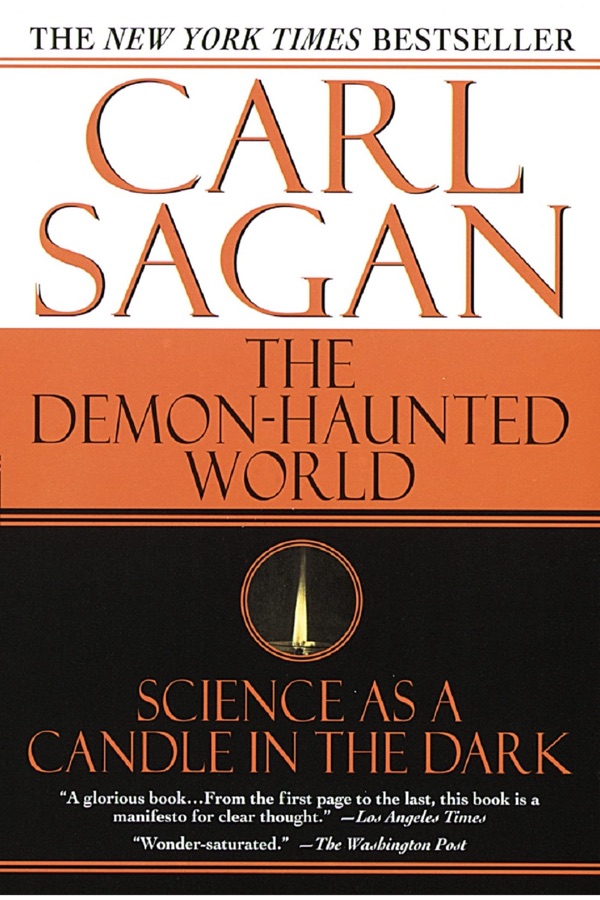
The cover of The Demon Haunted World

The Demon Haunted World

Science as a way of thinking: how scepticism balanced with wonder, and a kit for detecting baloney, protect us from pseudoscience, superstition and the errors of those in power.

23 parts, about 36 minutes to read.

Why read it

  • Shows why every scientific claim carries an error bar and why arguments from authority deserve mistrust
  • Gives a baloney detection kit of tools and named fallacies, illustrated by the tobacco industry's response to cancer research
  • Traces UFO abductions and recovered memories to hallucination and suggestion, and witch hunts to confessions extracted under torture

Who it is for

  • Readers who want practical tools for judging extraordinary claims
  • Parents and teachers keen to nurture children's questions
  • Readers curious why people believe in aliens, psychics and faith cures

What the summary covers

  1. My Teachers1 min
  2. The Most Precious Thing2 min
  3. Science and Hope2 min
  4. Faces on the Moon and Mars1 min
  5. Aliens, Hoaxes and Secrets2 min
  6. Hallucinations1 min
  7. Demons Before Aliens1 min
  8. Visions, Memory and Therapy2 min
  9. The Invisible Dragon2 min
  10. The Baloney Detection Kit3 min
  11. Obsessed with Reality2 min
  12. Antiscience2 min
  13. Newton's Sleep1 min
  14. When Scientists Know Sin1 min
  15. Scepticism and Wonder1 min
  16. The Wind Makes Dust1 min
  17. No Such Thing as a Dumb Question2 min
  18. Letters, and a Town That Built a Museum1 min
  19. The Path to Freedom2 min
  20. Significance Junkies1 min
  21. Maxwell and the Nerds2 min
  22. Science and Witchcraft1 min
  23. Real Patriots Ask Questions2 min

Recommended by

  • Richard DawkinsEvolutionary biologist and author
  • Philip PlaitAstronomer and author of the Bad Astronomy blog

About the author

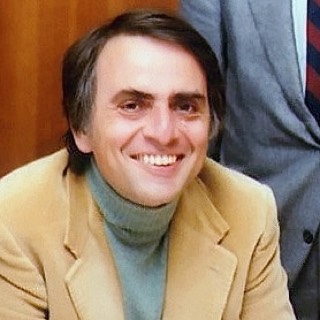
  • Carl SaganCornell University astronomy professor and Pulitzer Prize winner
    • He was born on November 9, 1934, in Brooklyn, New York.
    • He took bachelor's and master's degrees in physics and a doctorate in astronomy and astrophysics, all at the University of Chicago.
    • He taught at Harvard in the early 1960s, then at Cornell, where he became a full professor in 1971.
    • He played a leading role in NASA's Mariner, Viking, Voyager and Galileo missions to other planets.
    • He was a founding member and first president of the Planetary Society.
    • He co wrote and presented the television series Cosmos: A Personal Voyage, seen by more than 500 million people in 60 countries, and wrote this book to accompany it.
    • He won the 1978 Pulitzer Prize for The Dragons of Eden.
    • He died of pneumonia on December 20, 1996, at the age of 62.

More books like this