Knowingo
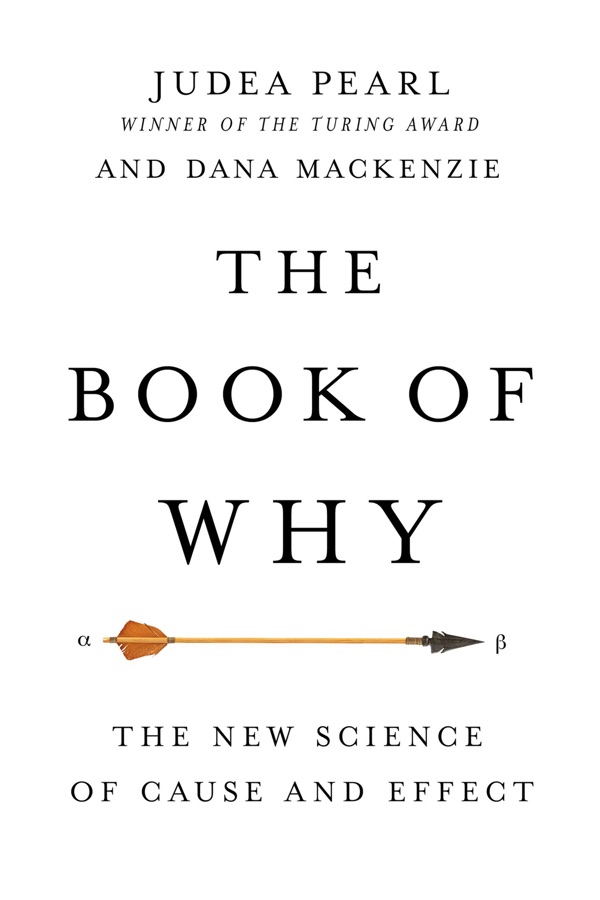
The cover of The Book of Why

The Book of Why

Learn how causal diagrams turn assumptions and data into answers about interventions, counterfactuals, mechanisms, and why even vast datasets cannot explain themselves.

10 parts, about 29 minutes to read.

Why read it

  • Learn why association cannot answer what an intervention would change, and how causal diagrams make assumptions visible and testable
  • Follow cases from smoking, cholera, and climate attribution to see confounding, instruments, counterfactuals, and mediation in action
  • Understand why even vast datasets cannot explain themselves, and what causal reasoning could add to artificial intelligence

Who it is for

  • Readers curious about causation beyond correlation
  • Researchers, analysts, and policy professionals who interpret observational evidence
  • People interested in the foundations and limits of artificial intelligence

What the summary covers

  1. Summary2 min
  2. The Ladder of Causation5 min
  3. Evidence, Bayes, and Graphical Information2 min
  4. Confounding and Deconfounding2 min
  5. The Smoke Filled Debate3 min
  6. Paradoxes and Data Generating Processes3 min
  7. Beyond Adjustment3 min
  8. Counterfactual Worlds3 min
  9. Mediation and Mechanism3 min
  10. Big Data and Causal Artificial Intelligence3 min

Recommended by

  • Daniel KahnemanNobel laureate in economic sciences and author of Thinking, Fast and Slow
    Have you ever wondered about the puzzles of correlation and causation? This wonderful book has illuminating answers and it is fun to read.
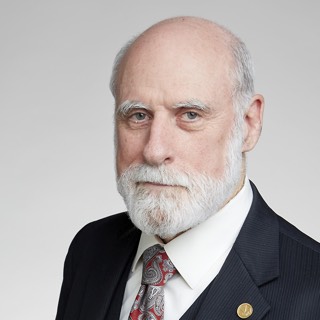
  • Vint CerfInternet protocol codesigner and Google Chief Internet Evangelist
    Pearl's accomplishments over the last 30 years have provided the theoretical basis for progress in artificial intelligence... and they have redefined the term 'thinking machine.'
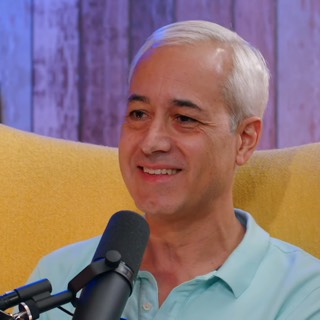
  • Pedro DomingosComputer science professor emeritus and author of The Master Algorithm
    If causation is not correlation, then what is it? Thanks to Judea Pearl's epoch-making research, we now have a precise answer to this question. If you want to understand how the world works, this engrossing and delightful book is the place to start.
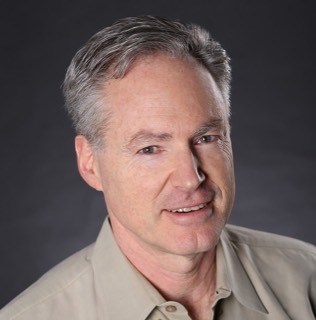
  • Eric HorvitzMicrosoft Chief Scientific Officer and artificial intelligence researcher
    Judea Pearl has been the heart and soul of a revolution in artificial intelligence and in computer science more broadly.
About the authors

  • Judea PearlUCLA computer scientist and Turing Award laureate who researches probabilistic and causal reasoning
    • Born in Tel Aviv on September 4, 1936.
    • Earned a doctorate in electrical engineering from the Polytechnic Institute of Brooklyn in 1965.
    • Is Chancellor’s Professor Emeritus at UCLA, where his interests include artificial intelligence, probabilistic and causal reasoning, and philosophy of science.
    • Won the 2011 ACM A.M. Turing Award for work on probabilistic and causal reasoning.
  • Dana MackenzieMathematician and science writer who coauthored The Book of Why
    • Earned a doctorate in mathematics from Princeton University.
    • Taught mathematics for six years at Duke University and seven years at Kenyon College.
    • Moved into science writing after studying journalism in the Science Communication Program at UC Santa Cruz.
    • Has written for Science, New Scientist, and Scientific American.

More books like this