Knowingo
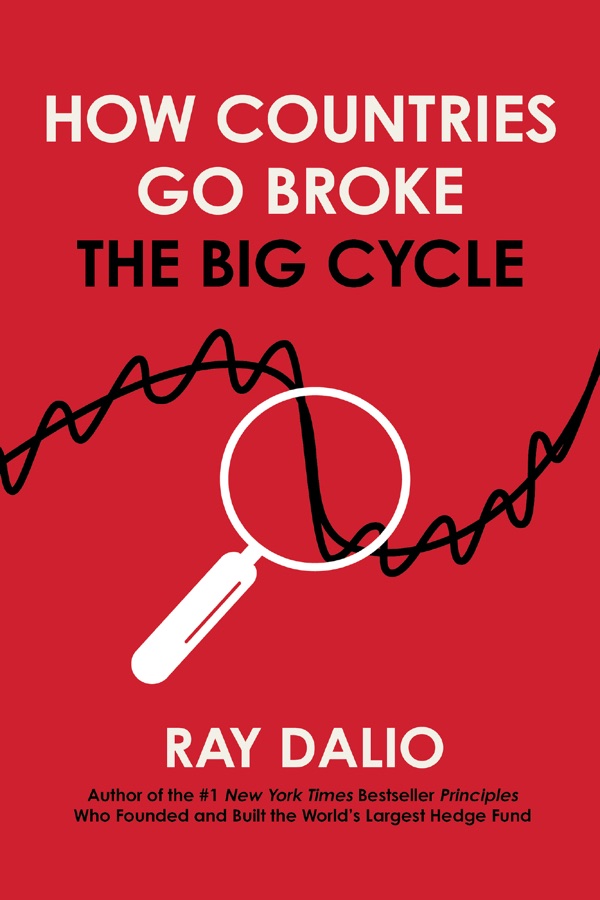
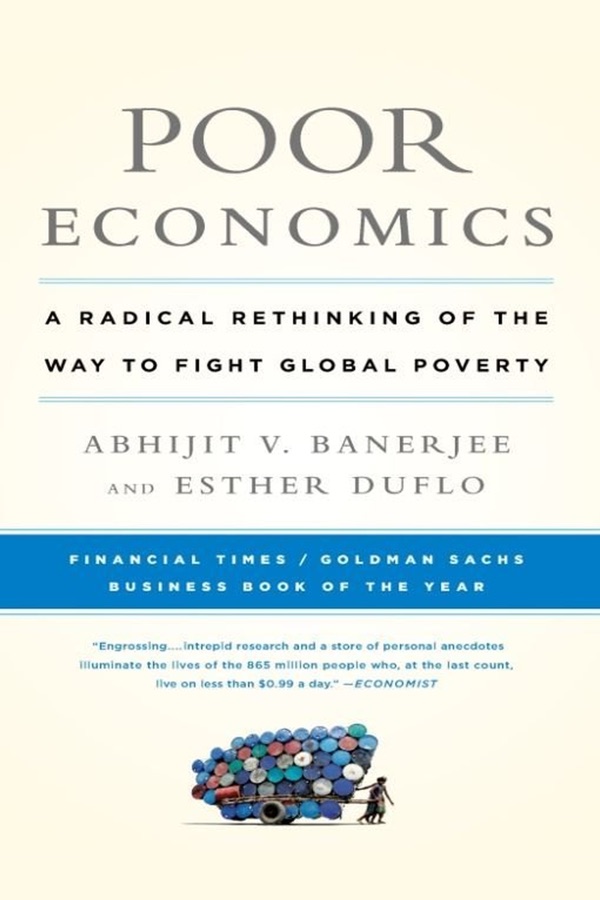
The cover of Poor Economics

Poor Economics

Randomized trials and fieldwork among the very poor show why many policies against poverty miss, and what small, tested changes in health, schooling, credit and saving can achieve.

11 parts, about 31 minutes to read.

Why read it

  • Treats poverty as a set of concrete problems, solved one at a time, instead of a debate about whether aid works
  • Explains why the poor make choices about food, health, children and savings that look odd from outside
  • Rests on randomized field experiments across many countries, testing each program rather than trusting grand theory

Who it is for

  • Aid workers and charity donors deciding what to fund
  • Economics students curious about field experiments
  • Officials who design health, school or credit programs

What the summary covers

  1. Think Again, Again2 min
  2. A Billion Hungry People?3 min
  3. Low Hanging Fruit for Better (Global) Health?3 min
  4. Top of the Class3 min
  5. Pak Sudarno's Big Family3 min
  6. Barefoot Hedge Fund Managers3 min
  7. The Men from Kabul and the Eunuchs of India3 min
  8. Saving Brick by Brick3 min
  9. Reluctant Entrepreneurs3 min
  10. Policies, Politics3 min
  11. In Place of a Sweeping Conclusion2 min

Recommended by

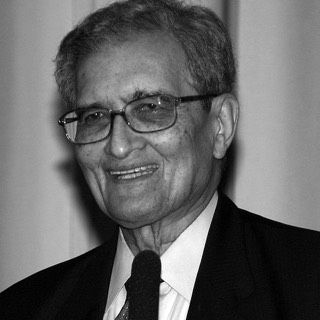
  • Amartya SenNobel laureate in economics
    A marvelously insightful book by two outstanding researchers on the real nature of poverty.
  • Robert SolowNobel laureate in economics
    I was fascinated and convinced.

About the authors

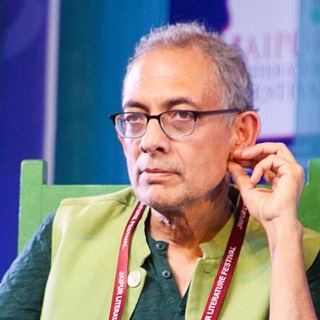
  • Abhijit V. BanerjeeNobel laureate in economics and professor of economics at MIT
    • Born in Mumbai, India, on 21 February 1961.
    • Both of his parents were professors of economics.
    • Studied at the University of Calcutta and Jawaharlal Nehru University in Delhi, then earned his doctorate at Harvard University.
    • Taught at Harvard and Princeton before becoming a professor at the Massachusetts Institute of Technology.
    • Around 1995 he heard Michael Kremer ask why economists did not run randomized controlled trials, and was persuaded to take up the method.
    • Founded the Poverty Action Lab at MIT in 2003 with Esther Duflo and Sendhil Mullainathan.
    • Shared the 2019 Nobel Prize in Economic Sciences with Esther Duflo and Michael Kremer for their experimental approach to alleviating global poverty.
    • Named one of Foreign Policy magazine's top 100 global thinkers in 2011 and served on the UN Secretary General's panel of eminent persons on the post 2015 development agenda.
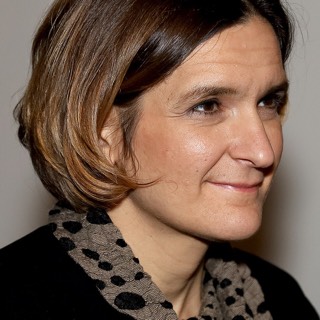
  • Esther DufloFrench American economist, Nobel laureate in economics and MacArthur Fellow
    • Born in Paris on 25 October 1972; her mother was a pediatrician and her father a professor of mathematics.
    • Studied history and economics at the École Normale Supérieure in Paris, then earned a PhD in economics at MIT in 1999.
    • Spent 1993 to 1994 in Moscow, where she joined a team advising the Russian Ministry of Finance on economic reforms.
    • Came to MIT as a graduate student in 1995.
    • Founded the Abdul Latif Jameel Poverty Action Lab at MIT in 2003 with Abhijit Banerjee and Sendhil Mullainathan.
    • Holds the Abdul Latif Jameel Professorship of Poverty Alleviation and Development Economics at MIT.
    • Received a MacArthur Fellowship in 2009, the John Bates Clark Medal in 2010, the Infosys Prize in 2014 and the Princess of Asturias Award for Social Sciences in 2015.
    • Shared the 2019 Nobel Prize in Economic Sciences with Abhijit Banerjee and Michael Kremer, and is married to Banerjee.

More books like this