Knowingo
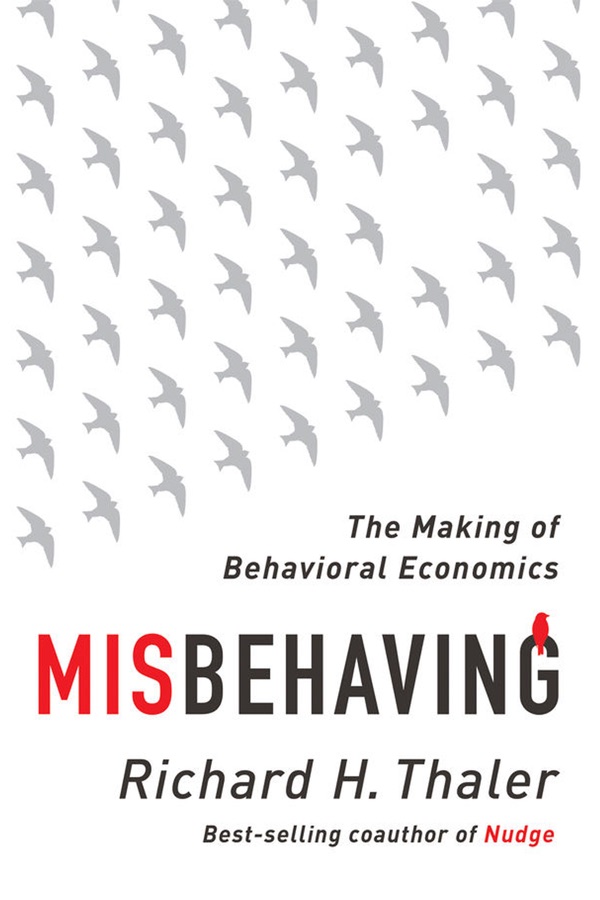
The cover of Misbehaving

Misbehaving

Richard Thaler tells how behavioral economics showed that real people misjudge prices, losses and fairness and give in to temptation, and how simple defaults helped workers save more.

11 parts, about 28 minutes to read.

Why read it

  • Shows, anomaly by anomaly, how real people depart from the rational agents of economic theory, and why the departures are predictable
  • Explains tools you can use: mental accounting, loss aversion, present bias, and defaults that raise saving without forcing anyone
  • A memoir of how an outsider's list of oddities, tested with experiments and market data, changed a whole discipline

Who it is for

  • Investors who suspect markets are not always right
  • Product and policy designers shaping other people's choices
  • Economics students frustrated by purely rational models

What the summary covers

  1. Preface1 min
  2. Beginnings4 min
  3. Mental Accounting3 min
  4. Self Control2 min
  5. Misbehaving in the Real World1 min
  6. Working with Danny3 min
  7. Engaging with the Economics Profession3 min
  8. Finance5 min
  9. Welcome to Chicago2 min
  10. Helping Out3 min
  11. What Is Next?1 min

Recommended by

  • Michael LewisAuthor of Moneyball
  • Malcolm GladwellStaff writer at The New Yorker
    If I had to be trapped in an elevator with any contemporary intellectual, I'd pick Richard Thaler
About the author

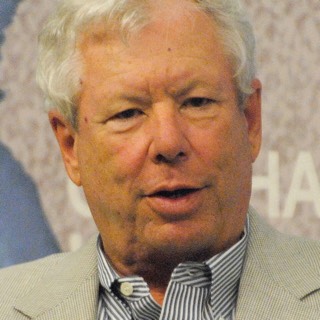
  • Richard H. ThalerNobel laureate in economics and Chicago Booth professor of behavioral science and economics
    • Born in East Orange, New Jersey, on 12 September 1945.
    • Co authored a well known paper with Sherwin Rosen that grew out of his Rochester thesis on valuing a human life.
    • Began keeping a list on his office blackboard of examples of people behaving in ways that economic theory could not explain.
    • Read the early papers of Daniel Kahneman and Amos Tversky on human judgment after a tip from a psychologist, and found in them the idea of systematic error.
    • Met Kahneman and Tversky during his year of research at Stanford.
    • Taught at the Cornell business school for 18 years.
    • Was a colleague of the law professor Cass Sunstein at the University of Chicago from 1995 to 2008.
    • Wrote the book Nudge with Sunstein.

More books like this