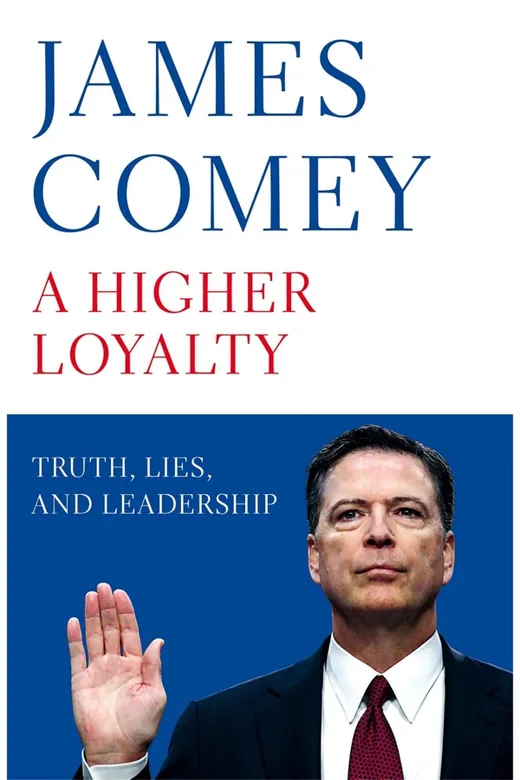
A Higher Loyalty
What does ethical leadership require when loyalty to a boss, to a team and to the truth pull in different directions?
 Knowingo
What does ethical leadership require when loyalty to a boss, to a team and to the truth pull in different directions?
Comey's most disputed claim is that loyalty to institutional values can require an official to make extraordinary public decisions outside ordinary practice. His account of the Clinton email investigation presents silence and disclosure as competing dangers to the Justice Department and the election. A common objection is that an unelected law enforcement leader should not substitute personal judgment about legitimacy for established restraint, especially when an announcement can alter politics. Comey answers that concealment would have been catastrophic if the new material later proved significant and that prior public testimony had created a duty to update Congress. He also admits that he was choosing among bad options rather than following a rule that guaranteed a neutral result. The memoir makes his reasoning intelligible, but it cannot resolve the counterfactual question of whether institutional trust would have suffered less if he had acted differently.
 A Civil ActionJonathan Harr
 A Matter of Interpretation: Federal Courts and the LawAntonin Scalia, Amy Gutmann
 A Very Stable GeniusPhilip Rucker, Carol Leonnig
 AbundanceEzra Klein, Derek Thompson
 Affairs of Honor: National Politics in the New RepublicJoanne B. Freeman
 Affluence and Influence: Economic Inequality and Political Power in AmericaMartin Gilens
 After Hegemony: Cooperation and Discord in the World Political EconomyRobert O. Keohane
 Age of AngerPankaj Mishra
 Ain’t I a Womanbell hooks
 All the President’s MenBob Woodward, Carl Bernstein
 All the Single Ladies: Unmarried Women and the Rise of an Independent NationTraister, Rebecca
 American Apartheid: Segregation and the Making of the UnderclassDouglas S. Massey, Nancy A. Denton