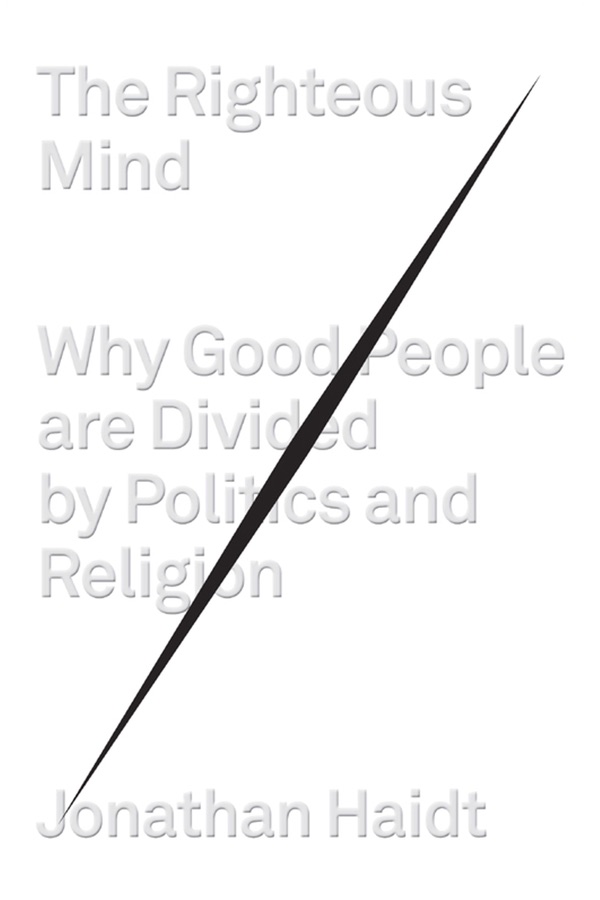
The Righteous Mind
Discover why good people disagree on politics and religion, how moral intuitions precede reasoning, and how understanding different moral foundations helps bridge deep social divides.
10 parts, about 26 minutes to read.


Discover why good people disagree on politics and religion, how moral intuitions precede reasoning, and how understanding different moral foundations helps bridge deep social divides.
10 parts, about 26 minutes to read.

A remarkable and original synthesis of social psychology, political analysis, and moral reasoning.
Jonathan Haidt is one of smartest and most creative psychologists alive
Haidt's research has revolutionized the field of moral psychology.
Haidt urges building relationships across party lines and listening with humility, while Hochschild describes five years of fieldwork among Louisiana Tea Party supporters, building an empathy bridge to them.
Haidt urges people to reach moral intuitions before arguing across political divides. Giridharadas shows canvassers inviting life stories and sharing their own, helping voters connect a political issue to experiences they have felt.
Jonathan Haidt says WEIRD societies are outliers who reduce morality to individual autonomy; Joseph Henrich traces their psychology to Church marriage rules that weakened kinship ties, while allowing that a hidden factor may remain.
 Algorithms to Live ByBrian Christian, Tom Griffiths
 At the Existentialist CaféSarah Bakewell
 Being You: A New Science of ConsciousnessAnil Seth
 BlinkMalcolm Gladwell
 Daring GreatlyBrené Brown
 David and GoliathMalcolm Gladwell
 Emotional IntelligenceDaniel Goleman
 FlowMihaly Csikszentmihalyi
 Hidden PotentialAdam Grant
 Hope for CynicsJamil Zaki
 How Minds ChangeDavid McRaney
 How to Change Your MindMichael Pollan