Knowingo
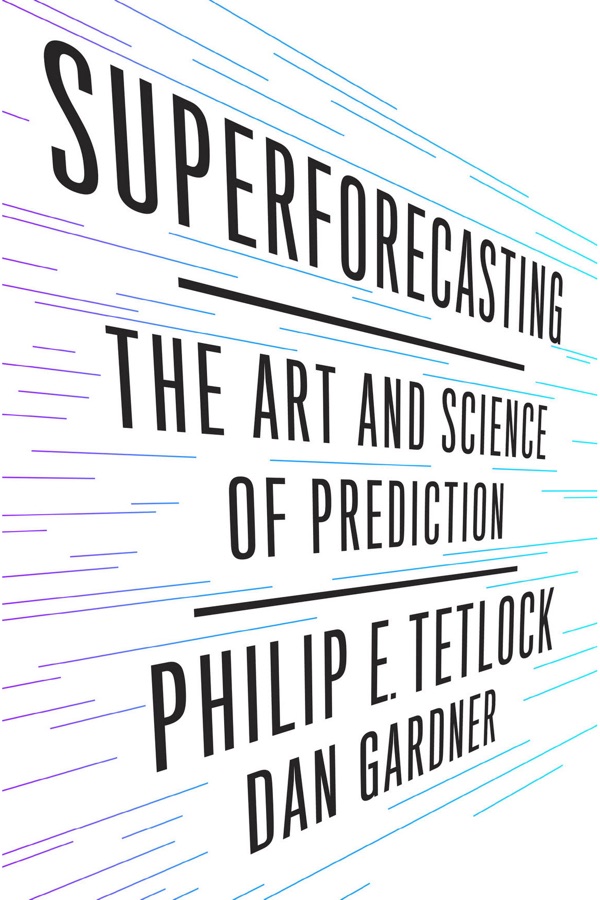
The cover of Superforecasting: The Art and Science of Prediction

Superforecasting: The Art and Science of Prediction

How ordinary volunteers came to forecast world events better than professional analysts, and the learnable habits behind it: precise probabilities, small frequent updates, and beliefs treated as hypotheses.

14 parts, about 25 minutes to read.
Why read it

  • Reports a forecasting tournament in which a team of ordinary volunteers beat professional analysts with classified data, and a few superforecasters stood out
  • Shows what superforecasters do: break problems down, start from base rates, update in small steps, and score their own results
  • Insists forecasts be precise enough to score, and ends with ten commandments and a case that teams and humility improve judgment

Who it is for

  • Analysts and managers who make predictions for a living
  • Leaders who must decide under uncertainty
  • Readers who want to judge pundits' forecasts more critically

What the summary covers

  1. An Optimistic Skeptic2 min
  2. Illusions of Knowledge2 min
  3. Keeping Score3 min
  4. Superforecasters2 min
  5. Supersmart?2 min
  6. Superquants?2 min
  7. Supernewsjunkies?2 min
  8. Perpetual Beta2 min
  9. Superteams1 min
  10. The Leader's Dilemma1 min
  11. Are They Really So Super?2 min
  12. What's Next?1 min
  13. Epilogue: Bill Flack1 min
  14. Ten Commandments2 min

Recommended by

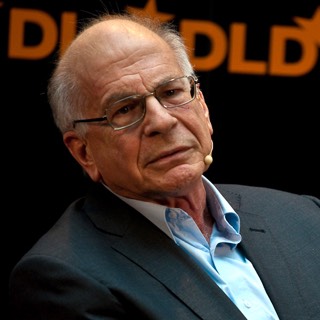
  • Daniel KahnemanNobel Prize winner and author of Thinking, Fast and Slow
    Philip Tetlock is the world expert on a vital subject. Superforecasting is the wonderful story of how he and his research team got ordinary people to beat experts in a very serious game.
  • Steven PinkerJohnstone Professor of Psychology at Harvard University
    The casual style of Superforecasting belies the profundity of its message.
  • Jonathan HaidtNew York University Stern School of Business professor and author of The Righteous Mind
    Full of great stories and simple statistics, Superforecasting gives us a new way of thinking about the complexity of the world, the limitations of our minds, and why some people can consistently outpredict a dart-throwing chimp.
  • Adam GrantWharton professor and author of Originals
    Superforecasting is a rare book that will make you smarter and wiser. One of the giants of behavioral science reveals how to improve at predicting the future.
  • Tyler CowenEconomist at George Mason University and author of Average Is Over
    You will come away disillusioned about the ability of experts, but also enlightened about how the best forecasters do it—and maybe even hopeful about your own prospects.
  • Tim HarfordFinancial Times columnist and author of The Undercover Economist
    There isn’t a social scientist in the world I admire more than Phil Tetlock.

About the authors

  • Philip E. TetlockPolitical psychologist, Annenberg University Professor at the University of Pennsylvania
    • Leonore Annenberg University Professor in Democracy and Citizenship and professor of psychology at the University of Pennsylvania, and professor of management at the Wharton School
    • Born in Toronto and raised in Winnipeg and Vancouver
    • PhD from Yale University, MA and BA from the University of British Columbia
    • Joined Wharton in 2011 after posts at the University of California, Berkeley and Ohio State University
    • Held fellowships at the Center for Advanced Study in the Behavioral Sciences at Stanford and the Russell Sage Foundation
    • Ran small forecasting tournaments between 1984 and 2003, summarized in Expert Political Judgment
    • Since 2011 has jointly led the Good Judgment Project with Barbara Mellers, which won the IARPA forecasting tournament
    • Received the 2008 Grawemeyer Award for Ideas Improving World Order
  • Dan GardnerCanadian author, formerly a columnist at the Ottawa Citizen
    • Author of books on psychology and decision making published in 25 countries and 19 languages
    • Earned a law degree at Osgoode Hall Law School and a master's degree in history
    • Worked at the Ottawa Citizen as a columnist and feature writer before his first book
    • As a journalist won or was nominated for every major award in Canadian newspaper journalism
    • His 2011 book Future Babble on failed expert predictions drew mainly on Tetlock's research
    • Edited the magazine Policy Options from 2015 to 2016, then served as a senior advisor in the office of the prime minister of Canada
    • Honorary senior fellow at the University of Ottawa, living in Ottawa
    • Later coauthored How Big Things Get Done with Bent Flyvbjerg (2023)

More books like this