Knowingo
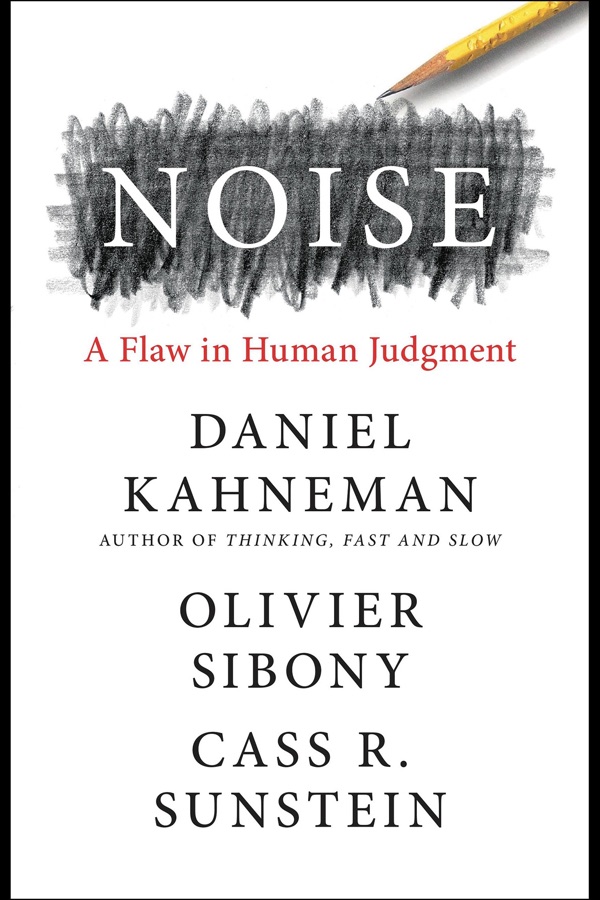
The cover of Noise: A Flaw in Human Judgment

Noise: A Flaw in Human Judgment

Why do judges, doctors, and underwriters given the same case reach wildly different answers? Learn how noise in judgment does as much damage as bias, and how to reduce it.

19 parts, about 34 minutes to read.

Why read it

  • Separates bias from noise, the unwanted variability in judgments, and shows through noise audits that professionals differ far more than executives expect
  • Breaks system noise into level noise, pattern noise and occasion noise, with examples from sentencing, asylum rulings, medicine and hiring interviews
  • Offers decision hygiene, habits such as independent judgments, structured assessments and relative scales that cut noise without naming the error they prevent

Who it is for

  • Managers who rely on individual judgment in hiring or ratings
  • Judges, doctors, underwriters and others who make repeated calls
  • Readers who want to see how forecasts go wrong

What the summary covers

  1. Bias and Noise2 min
  2. Crime and Noisy Punishment2 min
  3. The Insurance Noise Audit1 min
  4. Singular Decisions1 min
  5. Judgment as Measurement1 min
  6. Measuring Error1 min
  7. Level Noise and Pattern Noise1 min
  8. Occasion Noise2 min
  9. How Groups Amplify Noise2 min
  10. Judgments and Models2 min
  11. The Limits of Prediction2 min
  12. Heuristics, Matching, and Scales3 min
  13. Pattern Noise and Why Noise Stays Invisible2 min
  14. Better Judges and Decision Hygiene2 min
  15. Decision Hygiene in Practice4 min
  16. The Mediating Assessments Protocol1 min
  17. Objections to Noise Reduction1 min
  18. Rules, Standards, and Dignity2 min
  19. Taking Noise Seriously2 min

Recommended by

  • Angela DuckworthAuthor of Grit
    Noise may be the most important book I've read in more than a decade. A genuinely new idea so exceedingly important you will immediately put it into practice. A masterpiece.
  • Adam GrantAuthor of Think Again, host of the TED podcast WorkLife
    It’s rare for a book to cover more than two of those bases, but Noise rounds all four—it’s a home run.
  • Jonathan HaidtNYU Stern School of Business
    Kahneman, Sibony, and Sunstein have discovered a problem as large as an elephant: noise. In this important book they show us why noise matters, why there’s so much more of it than we realize, and how to reduce it.
  • Philip E. TetlockCoauthor of Superforecasting
    Noise is a masterful achievement and a landmark in the field of psychology.
  • Robert CialdiniAuthor of Influence and Pre Suasion
    The influence of Noise should be seismic, as it explores a fundamental yet grossly underestimated peril of human judgment.
  • Steven LevittCoauthor of Freakonomics
    Noise is an absolutely brilliant investigation of a massive societal problem that has been hiding in plain sight.
About the authors

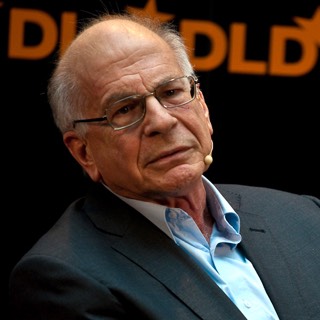
  • Daniel KahnemanPsychologist and Nobel laureate in economics; Princeton professor emeritus, died 2024
    • Born in Tel Aviv in 1934 while his mother was visiting relatives; the family's home was in Paris
    • First degree from the Hebrew University in Jerusalem, major in psychology, minor in mathematics
    • Began graduate study at Berkeley in January 1958
    • Wrote his dissertation in spring 1961
    • The collaboration with Amos Tversky began when he invited Tversky to speak to his graduate seminar, a life changing event in his words
    • Moved to UC Berkeley in 1986 and to Princeton in 1993, with a part time appointment at the Woodrow Wilson School of Public Affairs
    • Credited Richard Thaler and young economists, more than himself, with the work of integrating psychology into economics that the Nobel committee cited
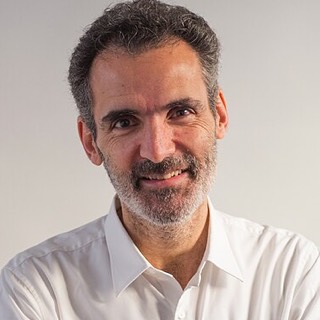
  • Olivier SibonyProfessor of strategy and management at HEC Paris
  • Cass R. SunsteinHarvard Law School professor and former head of the White House regulatory affairs office
    • Born on September 21, 1954, in Salem, Massachusetts.
    • Earned a Juris Doctor magna cum laude from Harvard Law School in 1978.
    • Clerked for Justice Thurgood Marshall of the U.S. Supreme Court from 1979 to 1980.
    • Was a professor at the University of Chicago Law School from 1981 to 2008, then joined Harvard Law School.
    • Served from 2009 to 2012 as head of the White House Office of Information and Regulatory Affairs.
    • Founder and director of the Program on Behavioral Economics and Public Policy at Harvard Law School.
    • From 2020 to 2021 chaired the World Health Organization's Technical Advisory Group for Behavioural Insights and Health.
    • Studies of legal publications in 2014 found him the most frequently cited American legal scholar by a wide margin.

More books like this