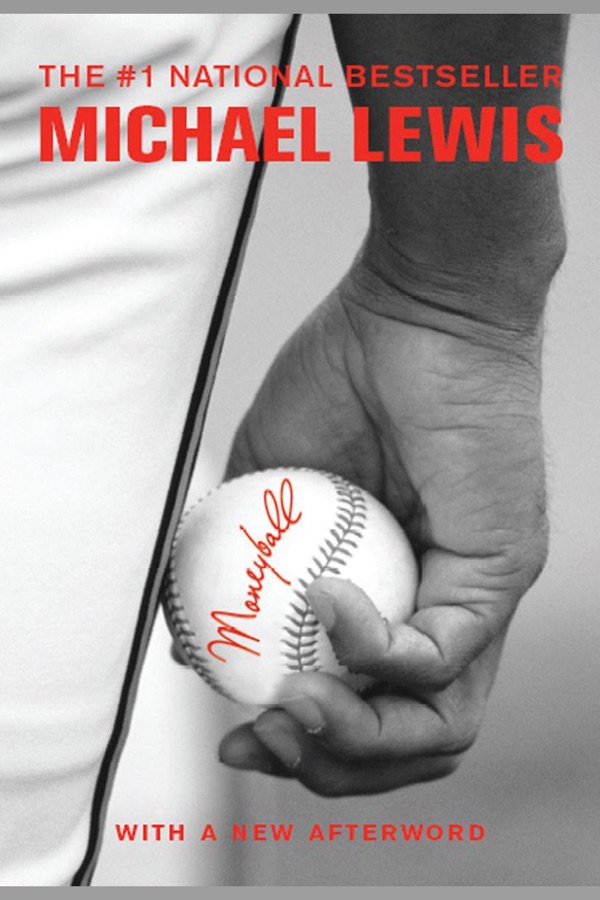
Moneyball
With a third of the Yankees' payroll, the Oakland A's kept winning. See how Billy Beane's front office used data to find value in players baseball had written off.
15 parts, about 31 minutes to read.


With a third of the Yankees' payroll, the Oakland A's kept winning. See how Billy Beane's front office used data to find value in players baseball had written off.
15 parts, about 31 minutes to read.

Michael Lewis's beautiful obsession with the idea of value has once again yielded gold.

I understood about one in four words of Moneyball, and it's still the best and most engrossing sports book I've read in years.

It’s a sports story that’s actually a business story that’s also a story about preconceptions. Plus, Michael Lewis’s writing is so clear, readable, and highly entertaining.
The single most influential baseball book ever.

 AI ValleyGary Rivlin
 Apple in ChinaPatrick McGee
 Bad BloodJohn Carreyrou
 Careless PeopleSarah Wynn Williams
 Competitive StrategyMichael E. Porter
 Creativity, Inc.Ed Catmull, Amy Wallace
 Elon MuskWalter Isaacson
 Empire of PainPatrick Radden Keefe
 EssentialismGreg McKeown
 Failure Is an OptionMike Grossman
 Getting to YesRoger Fisher, William Ury, Bruce Patton
 Good to GreatJim Collins