Knowingo
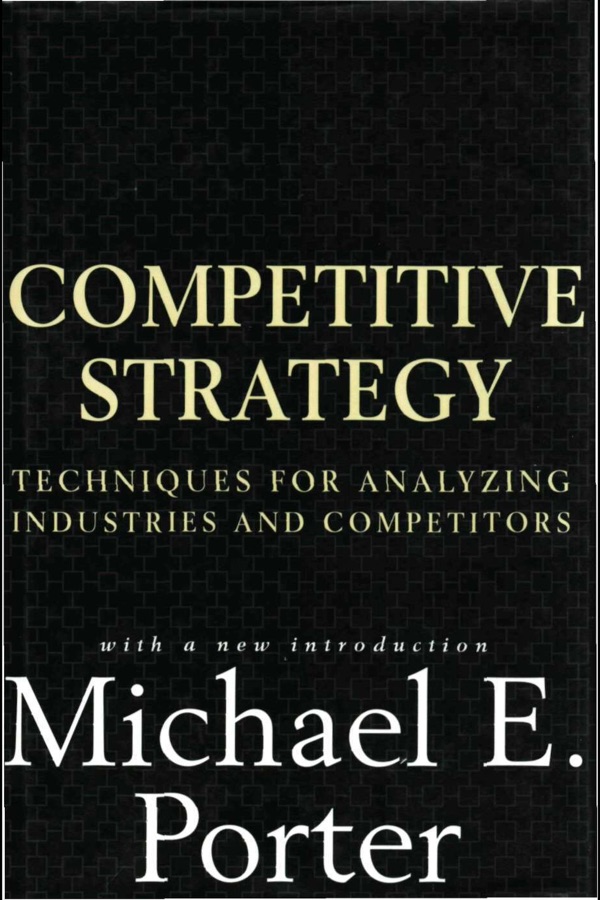
The cover of Competitive Strategy

Competitive Strategy

Porter's systematic method for reading an industry's structure and a firm's position in it: the five forces that cap profitability, three generic strategies, and how to read rivals' next moves.

10 parts, about 31 minutes to read.
Why read it

  • Explains how five forces set an industry's profit ceiling: new entrants, substitutes, buyers, suppliers and rivalry among existing competitors
  • Offers three generic strategies, cost leadership, differentiation and focus, and warns of getting stuck in the middle
  • Shows how to read rivals through signals, retaliation and commitment, then adapts strategy to emerging, declining and global industries

Who it is for

  • Managers setting strategy for a business or product line
  • Analysts sizing up an industry's profit potential
  • Founders weighing how to compete against larger rivals

What the summary covers

  1. Summary1 min
  2. Industry Structure Sets the Ceiling on Profit5 min
  3. Generic Strategies: Cost, Differentiation, Focus, and the Trap Between Them4 min
  4. Sizing Up Rivals: The Competitor Analysis Framework2 min
  5. Signals, Moves, and Commitment4 min
  6. Choosing Buyers, Managing Suppliers2 min
  7. Strategic Groups and Mobility Barriers3 min
  8. How Industries Evolve2 min
  9. Strategy Across Fragmented, Emerging, Maturing, Declining, and Global Industries5 min
  10. Vertical Integration, Capacity, and Entry3 min

Recommended by

  • Philip KotlerS.C. Johnson & Son Distinguished Professor of International Marketing, Northwestern University
    Porter's books on competitive strategy are the seminal works in the field.

About the author

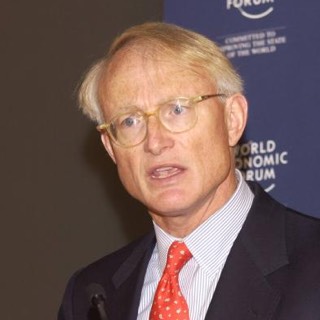
  • Michael E. PorterAmerican professor at Harvard Business School
    • Born on 23 May 1947, he is an American professor at Harvard Business School.
    • He earned a BSE in aerospace and mechanical engineering from Princeton University in 1969.
    • He took an MBA at Harvard Business School in 1971 and a PhD in business economics at Harvard in 1973.
    • At Harvard Business School he has applied economic theory and strategy concepts to problems facing corporations, economies and societies.
    • Harvard describes his work as having defined the modern strategy field.
    • Harvard Business School and Harvard University jointly established the Institute for Strategy and Competitiveness in 2000 to house his research.
    • He received the first Lifetime Achievement Award from the U.S. Department of Commerce for his contribution to economic development.
    • In 2000 Harvard named him a University Professor, its highest recognition for a faculty member.

More books like this