Knowingo
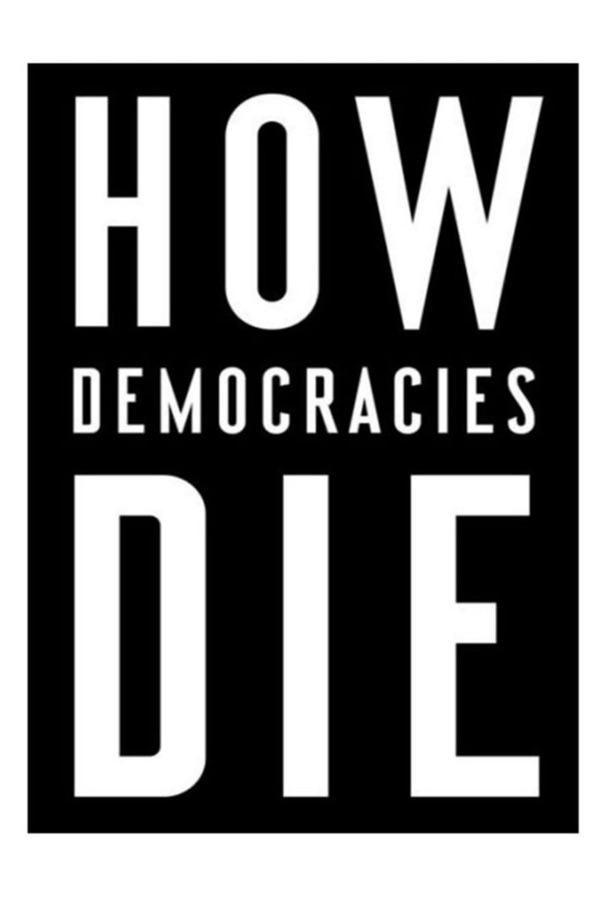
The cover of How Democracies Die

How Democracies Die

Two scholars of democratic breakdown show how elected leaders subvert democracy step by step, and why America's unwritten norms of mutual toleration and forbearance, long its guardrails, have been eroding.

10 parts, about 21 minutes to read.

Why read it

  • Shows that democracies now die less by coups than by elected leaders who hollow out institutions step by step
  • Gives you warning signs for spotting a would be autocrat and the unwritten norms that keep power in check
  • Compares breakdowns across Europe and Latin America with American history to test how safe any democracy is

Who it is for

  • Citizens worried about polarization in their own country
  • Party insiders deciding whom to nominate or ally with
  • Students of comparative politics and constitutional history

What the summary covers

  1. Is Our Democracy in Danger?2 min
  2. Fateful Alliances2 min
  3. Gatekeeping in America2 min
  4. The Great Republican Abdication2 min
  5. Subverting Democracy2 min
  6. The Guardrails of Democracy2 min
  7. The Unwritten Rules of American Politics2 min
  8. The Unraveling2 min
  9. Trump Against the Guardrails2 min
  10. Saving Democracy3 min

Recommended by

  • Francis FukuyamaPolitical scientist and author of The End of History
    We owe the authors a debt of thanks for bringing their deep understanding to bear on the central political issue of the day.

About the authors

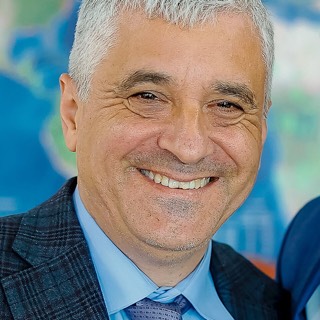
  • Steven LevitskyAmerican political scientist and professor of government at Harvard University
    • Directs the David Rockefeller Center for Latin American Studies at Harvard, where he is David Rockefeller Professor of Latin American Studies.
    • Studies democratization, authoritarianism, political parties and weak institutions, with a focus on Latin America.
    • Senior Fellow at the Kettering Foundation and Senior Democracy Fellow at the Council on Foreign Relations.
    • Born January 17, 1968.
    • Earned a BA in political science from Stanford in 1990 and a PhD in political science from UC Berkeley in 1999.
    • Joined Harvard as an assistant professor of government in 2000 and became a full professor in 2008.
    • Wrote Competitive Authoritarianism with Lucan Way (Cambridge University Press, 2010).
    • Has been a columnist for La Republica in Peru and Folha de Sao Paulo in Brazil.
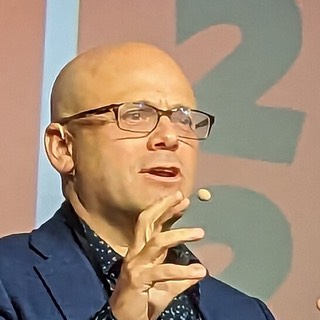
  • Daniel ZiblattAmerican political scientist and Eaton Professor of the Science of Government at Harvard
    • Directs Harvard's Minda de Gunzburg Center for European Studies, where he is Eaton Professor of Government.
    • Leads a research group on democracy and democratic erosion at the WZB Berlin Social Science Center.
    • Born in 1972.
    • Holds a BA in German studies and politics from Pomona College and a PhD in political science from UC Berkeley.
    • His first book, Structuring the State (Princeton, 2006), analyzed the formation of Italy and Germany in the 19th century.
    • His 2017 book Conservative Parties and the Birth of Democracy won the American Political Science Association's 2018 Woodrow Wilson Prize.
    • Elected a member of the American Academy of Arts and Sciences in 2023.

More books like this