Knowingo
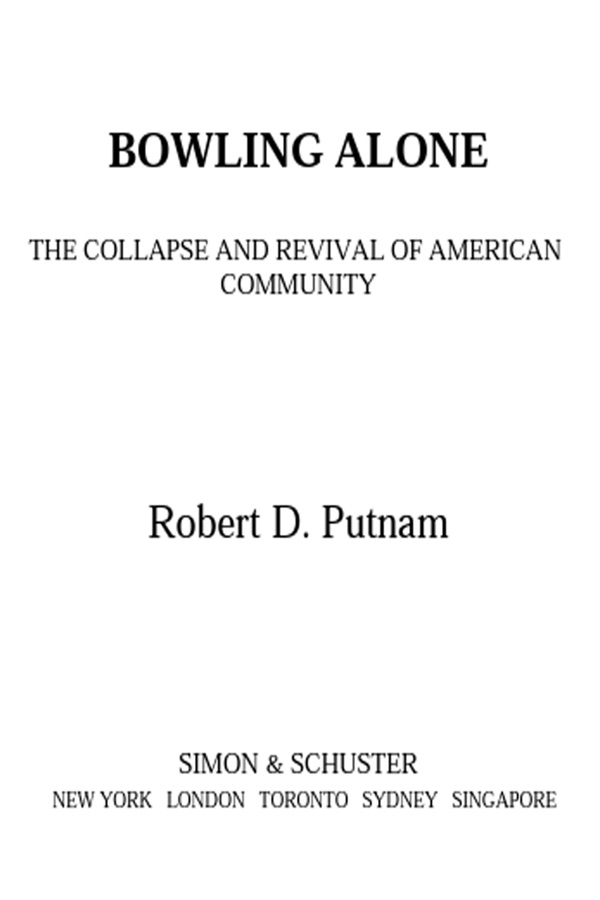
The cover of Bowling Alone: The Collapse and Revival of American Community

Bowling Alone: The Collapse and Revival of American Community

Robert Putnam traces the decline of American civic and social connection since the 1960s and argues for rebuilding the networks of trust and reciprocity that make communities and democracy work.

14 parts, about 37 minutes to read.
Why read it

  • Documents the century long arc of American civic life, rising then falling, across voting, clubs, churches, dinners and bowling leagues
  • Weighs suspects for the decline, including television, sprawl and generational change, and admits that a share of the cause stays unexplained
  • Shows what social capital buys, in health, safety, schools and jobs, and warns it can also bind hate groups

Who it is for

  • Readers worried about loneliness and weakening local community
  • Organizers and local leaders trying to revive community groups
  • Readers who like evidence driven social science

What the summary covers

  1. Social Capital and the Century's Arc3 min
  2. Political Participation3 min
  3. Civic and Religious Participation2 min
  4. Work, Informal Ties, and Everyday Connection2 min
  5. Giving, Trust, and Reciprocity2 min
  6. Small Groups, New Movements, and the Internet Question2 min
  7. Searching for Causes: Time, Money, Mobility, and Sprawl2 min
  8. Television and the Reshaping of Evenings2 min
  9. Generational Change2 min
  10. Apportioning the Causes2 min
  11. What Social Capital Buys8 min
  12. The Dark Side of Social Capital2 min
  13. Lessons from the Gilded Age and Progressive Era3 min
  14. An Agenda for Renewal2 min

Recommended by

  • Trevor PhillipsChairman of the Equalities and Human Rights Commission, when interviewed

About the author

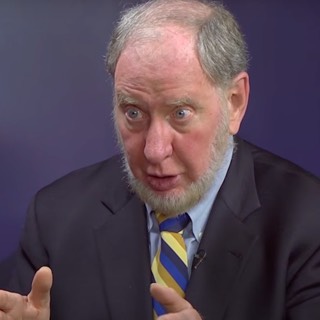
  • Robert D. PutnamPolitical scientist, professor of public policy at Harvard Kennedy School
    • Born in Rochester, New York, in 1941 and raised in Port Clinton, Ohio, where he bowled in a competitive league as a teenager
    • Raised in a small town in Ohio and educated at Swarthmore, Oxford and Yale
    • Taught at the University of Michigan and served on the staff of the US National Security Council before joining Harvard in 1979
    • At Harvard he has been Dean of the Kennedy School, Associate Dean of the Faculty of Arts and Sciences and Director of the Weatherhead Center for International Affairs
    • Member of the National Academy of Sciences, Fellow of the British Academy and past president of the American Political Science Association
    • Cofounded the Saguaro Seminar, which brings together thinkers and practitioners to develop ideas for civic renewal
    • Has written fifteen books, including Making Democracy Work and Bowling Alone
    • His life and work were the subject of the 2023 Netflix documentary Join or Die

More books like this