Knowingo
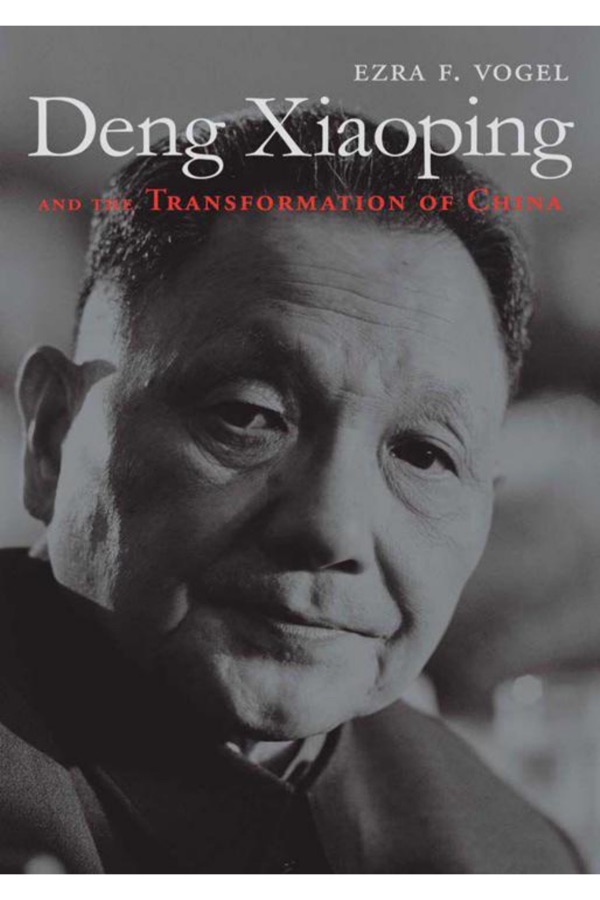
The cover of Deng Xiaoping and the Transformation of China

Deng Xiaoping and the Transformation of China

How Deng Xiaoping, purged three times, opened China to the world and to markets after Mao while holding firm on party rule, including the 1989 Tiananmen crackdown.

26 parts, about 45 minutes to read.

Why read it

  • Traces how a leader purged three times helped steer China from poverty and upheaval toward reform and opening
  • Helps you see how reform was actually built, through careful coalitions, local experiments and hard compromises
  • Notes that reform began before this leader took charge, and faces the bloody Beijing spring crackdown squarely

Who it is for

  • Readers who want to know where modern China came from
  • People doing business with China who want historical context
  • Students of leadership and political reform

What the summary covers

  1. Preface: In Search of Deng1 min
  2. Introduction: The Man and His Mission1 min
  3. From Revolutionary to Builder to Reformer, 1904 to 19692 min
  4. Banishment and Return, 1969 to 19742 min
  5. Bringing Order under Mao, 1974 to 19751 min
  6. Looking Forward under Mao, 19752 min
  7. Sidelined as the Mao Era Ends, 19762 min
  8. Return under Hua, 1977 to 19782 min
  9. Three Turning Points, 19782 min
  10. Setting the Limits of Freedom, 1978 to 19792 min
  11. The Soviet Vietnamese Threat, 1978 to 19791 min
  12. Opening to Japan, 19781 min
  13. Opening to the United States, 1978 to 19792 min
  14. Launching the Deng Administration, 1979 to 19801 min
  15. Deng's Art of Governing1 min
  16. Experiments in Guangdong and Fujian, 1979 to 19842 min
  17. Economic Readjustment and Rural Reform, 1978 to 19822 min
  18. Accelerating Economic Growth and Opening, 1982 to 19892 min
  19. One Country, Two Systems: Taiwan, Hong Kong, and Tibet2 min
  20. The Military: Preparing for Modernization1 min
  21. The Ebb and Flow of Politics2 min
  22. Beijing Spring, April 15 to May 17, 19892 min
  23. The Tiananmen Tragedy, May 17 to June 4, 19893 min
  24. Standing Firm, 1989 to 19922 min
  25. Deng's Finale: The Southern Journey, 19922 min
  26. China Transformed2 min

Recommended by

  • Chris PattenLast British governor of Hong Kong
    Ezra Vogel's massive biography assembles the case for Deng (1904-97) with narrative skill and prodigious scholarship.

  • Andrew J. NathanProfessor of political science at Columbia University
    One of the virtues of Vogel's analysis is that he understands the thinking of Deng's rivals as well as he does Deng's own.
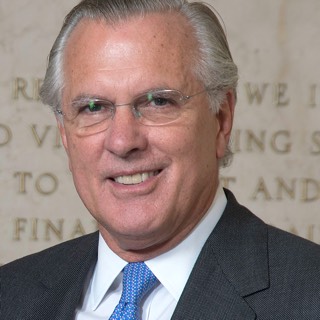
  • Richard W. FisherFormer president of the Federal Reserve Bank of Dallas
    I had to wait another 30 years, however, before a definitive biography would be written about Deng, arguably the most globally transformational leader of the 20th century.
About the author

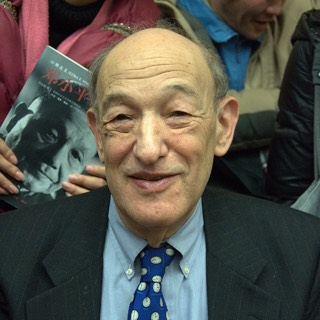
  • Ezra F. VogelLate Harvard sociologist who wrote on modern Japan, China and Korea
    • Son of Jewish immigrants, he grew up in Delaware, Ohio, graduated from Ohio Wesleyan University in 1950 and took a Ph.D. in sociology at Harvard in 1958.
    • After two years of fieldwork in Japan he joined Yale in 1960, then returned to Harvard in 1961 to study Chinese language and history.
    • He visited East Asia every year after 1958 and spent more than six years in the region.
    • He directed Harvard's East Asian Research Center, now the Fairbank Center, from 1973 to 1975 and again from 1995 to 1999.
    • In 1993 he took a two year leave from Harvard to serve as national intelligence officer for East Asia on the National Intelligence Council.
    • The Japanese edition of his 1979 book Japan as Number One remains the all time best seller in Japan among nonfiction by a Western author.
    • He began studying Deng Xiaoping after extensive interviews in Beijing with Deng's economic adviser Yu Guangyuan.
    • He gave his royalties from the Chinese translation of the Deng biography to Ohio Wesleyan to promote international study and travel.

Read it alongside

More books like this