Knowingo
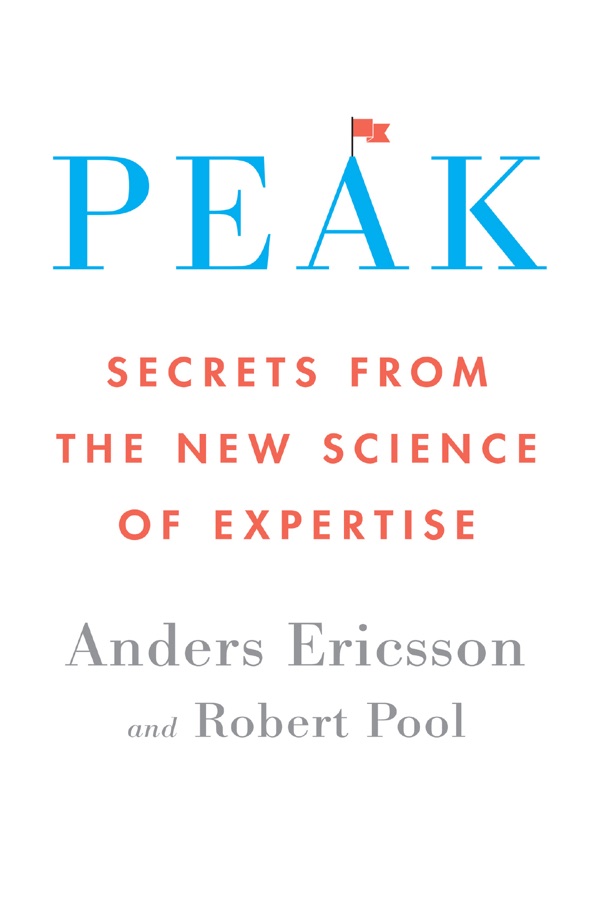
The cover of Peak

Peak

Learn what the science of expert performance actually shows about deliberate practice, mental representations, and why the popular '10,000 hour rule' flattens a far more precise and demanding finding.

10 parts, about 28 minutes to read.

Why read it

  • Shows through a student who learned to repeat long strings of random digits that apparent mental limits can be broken
  • Separates purposeful practice, with clear goals and feedback, from repeating the same thing for years without improving
  • Corrects the popular ten thousand hour rule and weighs natural talent against practice using chess players and musicians

Who it is for

  • Learners stuck on a plateau in a skill
  • Teachers and coaches designing better practice
  • Parents wondering whether talent decides who succeeds

What the summary covers

  1. The Gift2 min
  2. Breaking Through the Ceiling3 min
  3. A Brain Built to Adapt3 min
  4. How Experts See What Others Miss1 min
  5. The Gold Standard4 min
  6. Why Experience Alone Doesn't Make You Better3 min
  7. Practicing in Everyday Life3 min
  8. How the Best in the World Get There3 min
  9. What About Natural Talent?4 min
  10. Where Do We Go from Here?2 min

Recommended by

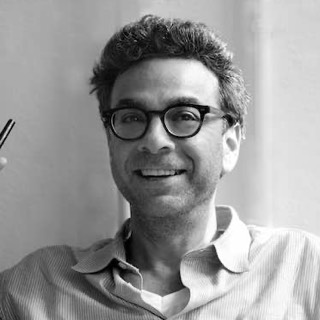
  • Stephen J. DubnerCoauthor of Freakonomics
    A remarkable distillation of a remarkable lifetime of work
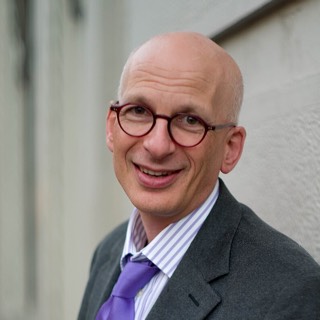
  • Seth GodinAmerican author and marketing expert
    This book is a breakthrough, a lyrical, powerful, science-based narrative that actually shows us how to get better (much better) at the things we care about.
  • Daniel CoyleAuthor of The Talent Code
    The science of excellence can be divided into two eras: before Ericsson and after Ericsson.

  • Joshua FoerAuthor of Moonwalking with Einstein
    Ericsson's research has revolutionized how we think about human achievement.
About the authors

  • Anders EricssonSwedish psychologist and Florida State University professor, died in 2020
    • Born in Stockholm on 23 October 1947, the oldest of three children.
    • He first studied nuclear engineering like his father, then turned to psychology and took a bachelor's degree at the University of Stockholm around 1969.
    • He received his Ph.D. at the University of Stockholm in 1976, then held a postdoctoral fellowship at Carnegie Mellon University with William Chase and the Nobel laureate Herbert Simon.
    • In 1992 he moved to Florida State University, where he was Professor and Conradi Eminent Scholar in the Department of Psychology.
    • He wrote some 275 articles, chapters and books, cited more than 80,000 times.
    • His 1993 study of violinists inspired what Malcolm Gladwell called the 10,000 hour rule.
    • He was lead editor of the field's first handbook, the Cambridge Handbook of Expertise and Expert Performance (2006).
    • He advised organizations such as the Philadelphia Eagles, Cirque du Soleil, Google and the CIA.
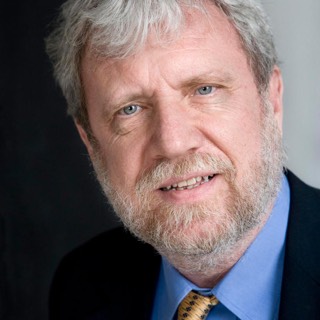
  • Robert PoolScience writer with a background in mathematics and physics
    • A nonfiction writer specializing in science and technology, he has worked as staff for both Science and Nature.
    • He has worked at some of the most prestigious science publications, including Science and Nature, and wrote three books before Peak.
    • He graduated magna cum laude from Rice University with a B.A. in physics, mathematics and history.
    • He earned a Ph.D. in mathematics from Rice University, and was an instructor at Rice and an assistant professor at Texas A&M University.
    • His earlier books include Eve's Rib: Searching for the Biological Roots of Sex Differences (Crown, 1994).
    • Another earlier book is Beyond Engineering: How Society Shapes Technology (Oxford University Press, 1997).
    • He has written well over 200 articles for publications including Discover, New Scientist, Science and Nature.

Read it alongside

More books like this