Knowingo
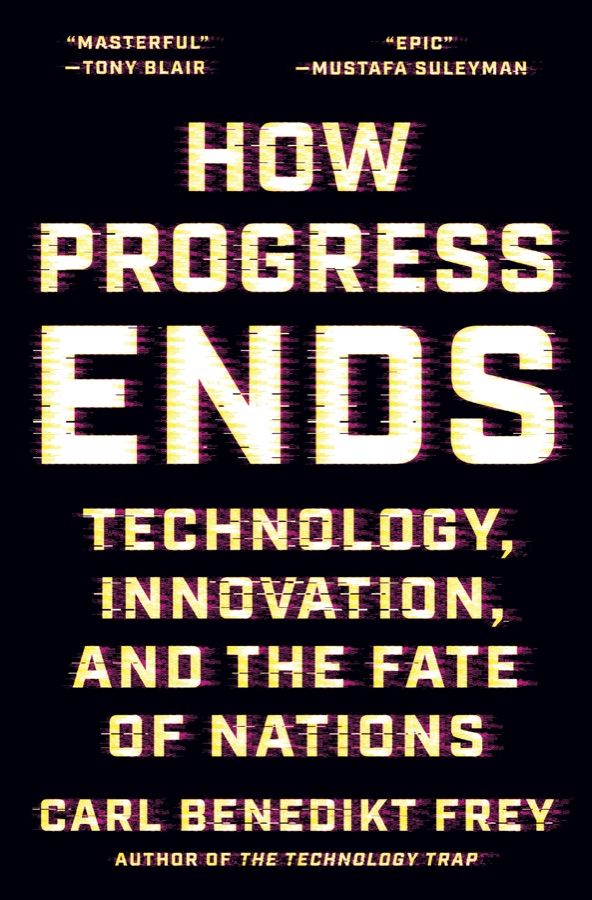
The cover of How Progress Ends

How Progress Ends

See why societies that once led in technology stall, and learn what keeps invention alive: open entry, mobile workers, real competition, and institutions that let challengers replace incumbents.

10 parts, about 16 minutes to read.

Why read it

  • Argues that progress stalls when institutions built for catching up are kept long after exploration matters more
  • Helps you judge when strong central direction works and when it smothers the challengers who find new paths
  • Tests the idea across China, Europe, the Soviet Union, Japan and America rather than one national story

Who it is for

  • Policymakers shaping industrial or antitrust policy
  • Founders and investors facing entrenched incumbents
  • Readers weighing whether China or America will lead innovation

What the summary covers

  1. Progress Has an Institutional Life Cycle1 min
  2. China's Early Lead and Later Reversal1 min
  3. Europe: Fragmentation Plus State Capacity1 min
  4. The Power and Limits of Catch Up2 min
  5. America's Market for Experimentation2 min
  6. War, Planning, and the Soviet Trade Off2 min
  7. China's Reform Era and Its New Reversal2 min
  8. America Against Itself1 min
  9. AI Does Not Abolish Discovery2 min
  10. Keeping Progress Alive2 min

Recommended by

  • Daron AcemogluNobel laureate economist
    I can’t imagine a better place to find answers than this far-ranging, intelligent book, which reminds us that human institutions and culture have always been critical to innovation and progress.

About the author

  • Carl Benedikt FreyDieter Schwarz Professor of Political Economy and Technology at the Oxford Internet Institute
    • Swedish German economist and economic historian, born in Stockholm
    • Studied economics, history and management at Lund University
    • PhD at the Max Planck Institute for Innovation and Competition in Munich, then joined the Oxford Martin School and founded its programme on the Future of Work
    • 2013 paper "The Future of Employment" estimated 47% of US jobs at high risk of automation
    • Earlier book The Technology Trap (2019) won Princeton's Richard A. Lester Prize
    • Fellow of Mansfield College and Oxford Martin Citi Fellow

More books like this